
67th Anniversary of the Passing of the Late King Mohammed V, Artisan of Morocco’s Independence
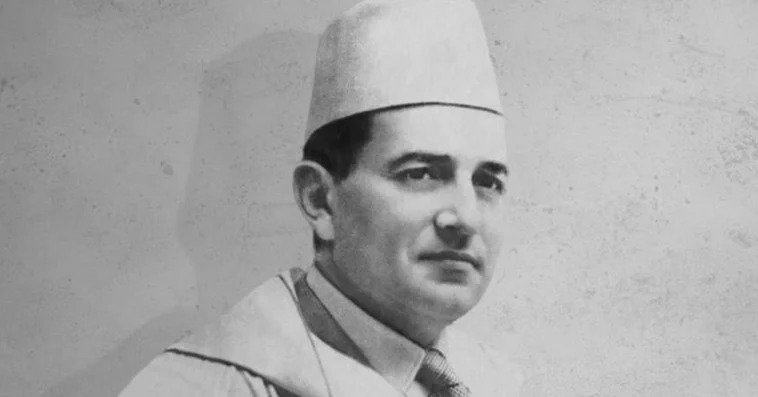
It is in prayer and solemn reflection that the Moroccan people commemorate this Saturday, the 10th of Ramadan 1447 H, the 67th anniversary of the passing of the late His Majesty Mohammed V, the architect of Morocco’s independence and a symbol of the people’s struggle for freedom and emancipation.
This commemoration serves as a duty of remembrance for the Father of the Nation, who dedicated his life wholeheartedly to the cause of Morocco’s independence and made immense sacrifices to realize his dearest dream—the dream shared by all Moroccans: seeing the last soldier of the protectorate leave national soil, to focus on the colossal task of building a state governed by law and democracy.
Only four years after the proclamation of the Kingdom’s independence, the beloved Sovereign passed away on the 10th day of Ramadan in the year 1380 H (February 26, 1961), leaving Moroccans with the memory of a patriotic, committed, and courageous King who devoted his life to the just cause of his country, facing countless difficulties and the schemes hatched by colonial authorities, without ever losing his faith and determination.
In his tireless struggle for independence, the late HM Mohammed V insisted on concerted action and coordination with the national movement, convinced that regaining sovereignty could not be the work of a single person or institution, but rather the result of a collective effort grounded in the faith and mobilization of the Moroccan people.
The climax of this collective nationalist action was the presentation of the Manifesto of Independence on January 11, 1944, a bold initiative reflecting the perfect symbiosis between the Throne, the national movement, and the people, marking the first step towards liberation from colonial rule.
On April 10, 1947, Sultan Mohammed Ben Youssef traveled to Tangier to deliver a resounding speech that would make history. In this address, the Sovereign solemnly and unequivocally stated, for the first time, the demand for Morocco’s independence, sending shivers down the spines of colonial authorities who, pushed into a corner, would resort to all means necessary to regain control of the situation.
After their failed maneuvers, blackmail, and threats aimed at pressuring the late HM Mohammed V to abandon the national struggle, the colonizers orchestrated a sordid plot against the Sultan and the esteemed Royal Family, forcing them into exile in August 1953, first in Corsica and then in Madagascar.
This sinister strategy of the occupying forces backfired. Aimed at severing the ties between the late King and his loyal people, the deportation of Sultan Mohammed Ben Youssef only served to further unite the people and the national movement behind him, triggering a wave of popular uprisings and armed actions against colonial forces, and transforming independence into a cause championed not just by an elite of political and nationalist intellectuals, but by an entire people rallied around their Sovereign.
This glorious saga of patriotism, courage, and loyalty culminated in the triumphant return of the Father of the Nation and the esteemed Royal Family to the Motherland on November 16, 1955, followed a year later by the announcement of independence and the beginning of the “Great Jihad,” the endeavor to build a new and modern Morocco.
Following the recovery of the Kingdom’s independence, and in the same spirit as the Father of the Nation, the late His Majesty Hassan II, a companion in the struggle of the Independence Hero, continued the work of consolidating these achievements by embarking on an extensive program for the economic and social development of the country. His worthy successor, His Majesty King Mohammed VI, then took up the mantle to advance the legacy of his predecessors with determination and selflessness.
Since ascending to the Throne of His Glorious Ancestors, His Majesty King Mohammed VI, may God assist Him, has committed himself to consolidating this grand national project, ushering Morocco into a new era—one of modernity and development.