Social Dialogue: The Akhannouch Government Achieves Major Progress for Workers and Strengthens Its Social Commitment
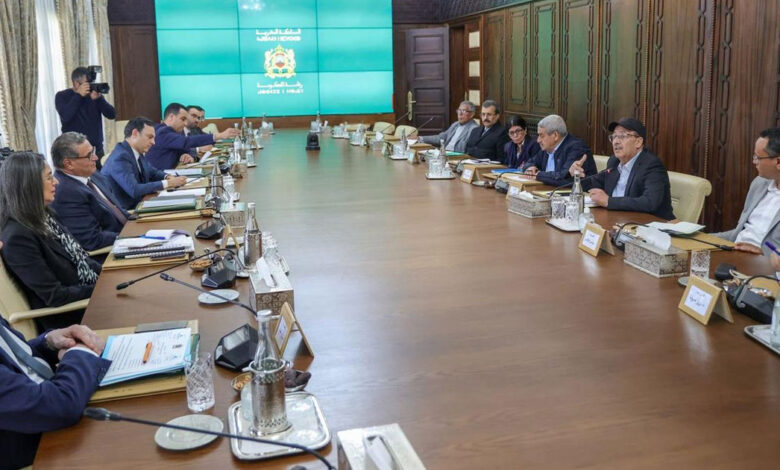
April Session of Social Dialogue Launched in Rabat
On Tuesday, the April session of social dialogue was inaugurated in Rabat, presided over by the Head of Government, Mr. Aziz Akhannouch, according to an official statement from his department. This meeting was attended by several members of the government, including Ms. Nadia Fettah, Minister of Economy and Finance, as well as delegated ministers Fouzi Lekjaa, Mustapha Baitas, Amal El Fellah Seghrouchni, and Minister Younes Sekkouri.
Mr. Akhannouch led a series of separate meetings with the main trade unions and the General Confederation of Enterprises of Morocco (CGEM). These gatherings brought together representatives from the Moroccan Labour Union (UMT), the General Union of Workers of Morocco (UGTM), the Democratic Confederation of Labour (CDT), and CGEM.
In an atmosphere characterized by responsible and constructive dialogue, the parties acknowledged the government’s adherence to its previous commitments, particularly those stemming from the April 2024 agreement. This accord ratified several key measures, including a general salary increase of 1,000 dirhams net in the public sector, to be paid in two installments, with the second scheduled for July. A reduction in income tax (IR) of up to 400 dirhams for medium incomes was also confirmed.
The agreement also provides for a 10% increase in the minimum wage, both in the industrial, commercial, and liberal sectors (SMIG) and in the agricultural sector (SMAG).
Discussions also focused on ongoing social commitments, challenges related to collective bargaining agreements, and addressing specific issues for certain professional categories. The handling of matters related to local authorities was also included in the agenda, with the goal of finding concrete and swift solutions.
The session reaffirmed the participatory approach adopted by the government since the beginning of its mandate, particularly in structural reforms such as pension systems. In this context, the methodology for implementing this reform was discussed, drawing on the principles established in the agreement signed in April 2022 and revitalizing the national commission dedicated to this initiative.
Finally, other major issues were raised, such as amending the Labour Code, addressing the expectations of both trade unions and employers.
Mr. Akhannouch concluded these discussions by praising the quality of the partnership between the government and its social and economic interlocutors, which he views as constant and not merely circumstantial. He emphasized that this dynamic aligns with the royal desire to make social dialogue a strategic lever of the social state, aimed at improving workers’ conditions and bolstering the competitiveness of the national economy.
He also reminded that the government, in just two and a half years of its mandate, has successfully sealed two major social agreements, illustrating its determination to make social dialogue a cornerstone of its actions to strengthen purchasing power and social cohesion.