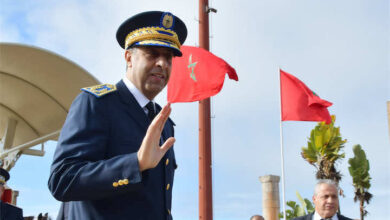
Hammouchi: Morocco’s Hosting of the 93rd INTERPOL General Assembly Reflects Its Strong Commitment to Enhanced Multilateral Security Cooperation
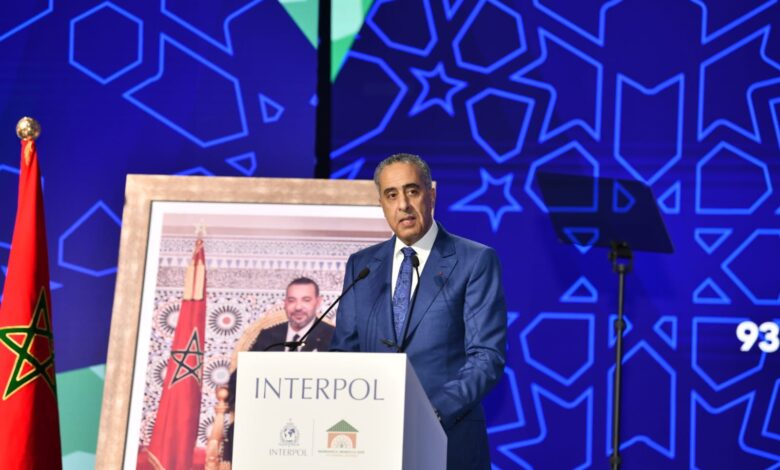
Morocco Hosts the 93rd INTERPOL General Assembly, Reinforcing Commitment to International Security Cooperation
The opening of the 93rd General Assembly of INTERPOL in Marrakech on Monday reflects Morocco’s steadfast commitment to enhanced multilateral security cooperation and its active involvement in international efforts against the rising threats of organized transnational crime, stated Abdellatif Hammouchi, Director General of National Security and Territorial Surveillance.
"This unwavering commitment aligns with the High Directives of His Majesty King Mohammed VI, may God assist him, who views security as a common good and a shared responsibility. The preservation of this security hinges on solid institutional cooperation, societal partnerships, and robust joint action at the international level," emphasized Hammouchi during the session’s opening (November 24-27).
In this context, Morocco’s national security services have implemented an integrated security strategy that balances the preservation of security with respect for human rights, where police action and security communication are inseparable and serve the citizen, he observed.
"Facing cross-border threats stemming from the ramifications of virtual criminal structures, the interconnection of criminal networks and entities, or the proliferation of regional terrorist hubs, it is essential to establish common and indivisible security structures based on close coordination among national police forces, INTERPOL, and related regional organizations," he remarked.
To ensure collective security, it is crucial not only to develop national security institutions but also to modernize their operational mechanisms to meet the growing expectations of citizens, he continued, advocating for the strengthening of international cooperation and mutual assistance among states.
Moreover, Hammouchi highlighted INTERPOL’s central role in promoting international police cooperation, enhancing multilateral cooperation mechanisms, and solidifying relationships between law enforcement agencies in member countries. He noted that the resurgence of security threats and the emergence of new forms of crime, coupled with the misuse of new technologies, place increased responsibilities and burdens on INTERPOL and national security bodies.
In this respect, he shared a common ambition for an "INTERPOL of tomorrow," aimed at building a safer world where security forms the foundation for development and is the pillar of prosperity and stability. He added that achieving this goal must inevitably pass through the General Assembly taking place in the ochre city.
In this light, he expressed his satisfaction that this session would address new security challenges and emerging atypical threats. He pointed out that deploying new global policing capabilities, enhancing INTERPOL’s regional presence and operational impact, and encouraging states to ratify the United Nations Convention against Cybercrime are pressing topics that call for greater international solidarity against cybercrime, a form of hybrid warfare that seeks to undermine states and compromise their security and stability.
He also noted that dedicating significant discussion to the role of women and their position within policing represents a distinguished initiative that embraces a gender approach, considering the successes achieved by female officers in the field, including in the most complex and dangerous situations.
"The Kingdom of Morocco is fully confident in the successful outcomes of this General Assembly and remains committed to strengthening its collaborative efforts with the INTERPOL General Secretariat and all member states," he stated, adding that this commitment stems from a firm belief that security is a common investment and a collective asset that everyone must strive to achieve, preserve, and continuously uphold.
In conclusion, he asserted that the INTERPOL General Assembly serves as the most appropriate platform to discuss collective security challenges and to devise the best approaches for its preservation and enhancement.
This 93rd General Assembly will examine major global criminal trends, including the dismantling of transnational criminal networks, the fight against international fraud centers, the strengthening of global police capabilities, and the promotion of women’s roles in policing.
As INTERPOL’s supreme governing body, the General Assembly is the largest global gathering of law enforcement leaders. It presents an opportunity for member countries to forge relationships and share their experiences.
During this session, various issues will be addressed, including the identification and dismantling of organized transnational crime, the obliteration of transnational fraud centers, strengthening INTERPOL’s global police capabilities, and promoting women’s roles within the police force.