Agadir Hosts OECD Meetings on Food Quality

Agadir is hosting three major events organized by the Organisation for Economic Co-operation and Development (OECD) starting this Tuesday, focusing on quality, compliance, and sustainability in agricultural products: the meeting of heads of national inspection services, the Workshops on Harmonizing Compliance Controls, and the plenary meeting of the OECD Scheme for Fruits and Vegetables.
These meetings bring together delegations representing more than 20 member and partner countries, including Germany, France, Spain, Italy, the Netherlands, as well as several African and South American nations. Various international and regional institutions are also participating in these discussions.
An Exemplary Partnership Between Morocco and the OECD
At the opening of the 19th meeting of heads of national inspection services, Ahmed El Bouari, the Minister of Agriculture, Maritime Fisheries, Rural Development, and Water and Forests, emphasized that hosting these meetings in Morocco reflects the strong partnership with the OECD. He highlighted the significant advances made by the Kingdom in sustainability, agricultural product quality, and enhancing the competitiveness of its sectors.
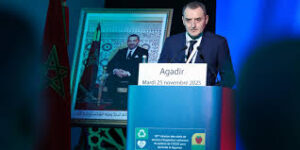
In the presence of Csaba Gaspar, head of department at the OECD, and representatives from the FAO and EBRD, the minister reaffirmed Morocco’s commitment to promoting an agricultural model based on cooperation, transparency, and sustainability, in order to ensure a safe, sustainable, and equitable food future.
Official Launch of the Morocco Sustain Food Standard Label
One of the key announcements during this inaugural session was the launch of the Morocco Sustain Food Standard (MSFS) label, developed by Morocco Foodex in partnership with the FAO, and co-financed by the EBRD and the European Union. This national sustainability benchmark evaluates:
- governance,
- regulatory compliance,
- social responsibility,
- environmental performance.
The MSFS is based on three levels of certification: commitment, mastery, and excellence.
On this occasion, the minister presented awards to 22 pilot companies in the citrus, vegetables, processed goods, and fishing sectors that have received their first certification.
A Structured and Progressive Rollout
The new label has been introduced through:
- a national caravan covering six regions,
- a feasibility study involving 30 companies,
- an international benchmark with 16 global standards,
- a training program for auditors and companies.
An African Platform for Harmonization and Cooperation
Throughout the three days of the event, a special Africa session aims to strengthen the exchange of fruits and vegetables and promote South-South cooperation.
The harmonization workshops will enable inspectors from various countries to work on practical cases in order to:
- modernize control practices,
- align procedures with international standards,
- meet the requirements of European markets, especially those of the Green Deal,
- highlight the excellence of Made in Morocco.