Lekjaa calls for strengthening collaboration between public and private stakeholders for the 2030 World Cup.
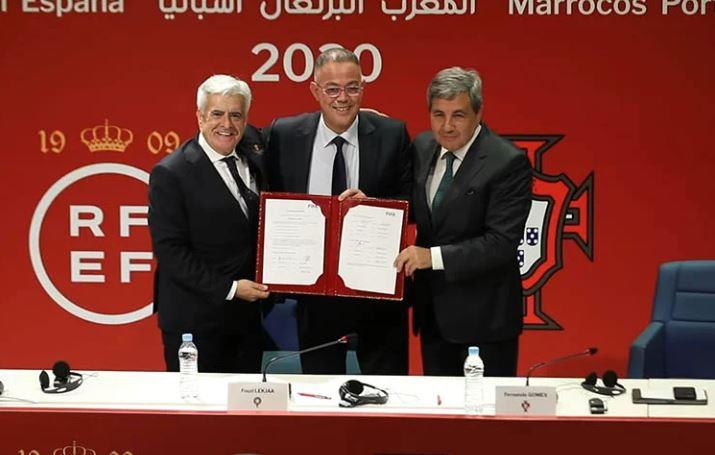
Enhancing Cooperation for the 2030 World Cup
On Tuesday in Salé, the Minister Delegate for Budget and President of the Royal Moroccan Football Federation, Fouzi Lekjaa, called for intensified exchanges, meetings, and consultations among the public and private sectors of the host nations for the 2030 FIFA World Cup.
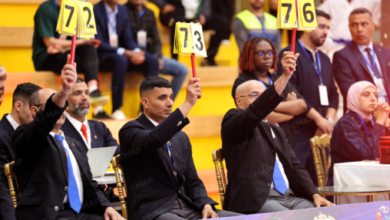
“These consultations allow us to pool our competencies, share best practices, and generate sustainable added value,” Mr. Lekjaa remarked during the opening of the Morocco-Spain-Portugal Business Forum on the 2030 World Cup, co-organized by the General Confederation of Moroccan Enterprises (CGEM), the Spanish Confederation of Business Organizations (CEOE), and the Portuguese Entrepreneurs’ Confederation (CIP).
He emphasized that the 2030 World Cup should fundamentally serve as a unifying project for youth, fostering connections between peoples and building a shared future based on cooperation, innovation, and progress.
“This initiative, rooted in a long history of civilizational, cultural, and economic complementarity among the three countries, represents an opportunity to leverage all their strengths to create a seamless, coherent, and exemplary organization,” he continued.
Mr. Lekjaa also stressed the logistical, security, and organizational challenges posed by a tournament spread across multiple territories, highlighting the significant movement of teams and supporters. He noted that successfully managing over a hundred matches in a compressed timeframe requires continuous coordination, enhanced collective intelligence, and tight harmonization of infrastructures, transport systems, and management processes.
According to him, businesses, regardless of their size, are the central pillar for successfully organizing an international event of this magnitude, such as the 2030 World Cup.
“From large companies responsible for constructing infrastructures and stadiums to the smallest firms involved in ticketing and entrance security, all are called to engage intelligently and sustainably to ensure the success of such events,” he stated.
Indeed, the complementary involvement of businesses will facilitate multiple projects and generate the anticipated added value across the three nations, Mr. Lekjaa explained.
Furthermore, he touched upon the organization of the Africa Cup of Nations (CAN) Morocco-2025, which will be conducted under “exceptional” conditions, showcasing the organizational maturity of the Kingdom, the competence of national frameworks, and the ability of Moroccan companies to design, construct, and manage complex events.
He reiterated that investments in sports infrastructure, particularly through modern and integrated complexes, reflect a holistic approach that combines social, economic, and territorial dimensions, aiming to use sports as a genuine tool for influence, cohesion, and emergence for Morocco.
The opening of this forum was marked by the participation of CGEM President Chakib Alj and CEOE President Antonio Garamendi.
This forum aims to promote joint business opportunities, share best practices and successful experiences, encourage innovation, and maximize the long-term impact of investments related to the 2030 World Cup.
It gathered Moroccan, Spanish, and Portuguese companies operating in sectors related to organizing major international sporting events, including infrastructure, mobility, tourism, hospitality, innovation, digital services, and logistics.