Motsepe Praises Morocco’s AFCON Performance and Decries the “Inferiority Complex” in African Football
CAF President Calls for an End to the “Inferiority Complex” in African Football
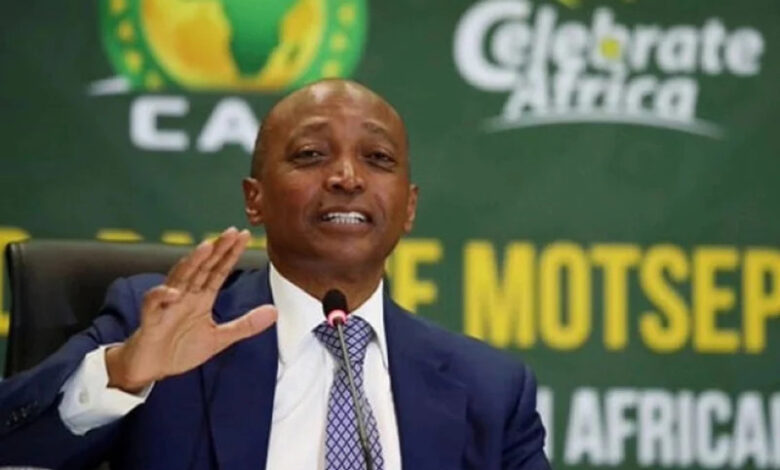
The President of the Confederation of African Football (CAF), Patrice Motsepe, has urged an end to what he describes as the “inferiority complex” that continues to affect a segment of the African narrative. He believes that persistent doubts about the ability of Africans to manage their own football affairs do more harm to the continent than good.
Speaking at a press conference on Saturday, just before the Africa Cup of Nations final, Motsepe shared strong sentiments. “What sometimes saddens me is that some African media voices are harsher towards themselves than Europeans are, who respect us and work alongside us in a spirit of partnership and cooperation. Freedom of expression does not mean belittling our achievements or engaging in self-flagellation,” he stated.
The CAF President emphasized that African football has made significant strides in recent years, urging stakeholders to focus not on isolated dysfunctions but on major successes in organization, performance, and commercial value.
He also affirmed that the CAF does not show preferential treatment to any of the 54 member countries, stressing that its role is to ensure equality and respect among all federations, with fairness being a fundamental principle of governance within the continental body.
Regarding officiating, he acknowledged legitimate questions surrounding certain decisions, including those related to the use of Video Assistant Referee (VAR) technology. However, he underscored that the credibility of the CAF is determined by the overall tournament experience, rather than isolated incidents, reminding attendees that he himself follows the matches on television like any spectator.
Motsepe considered this edition of the Africa Cup of Nations to be among the most successful in the competition’s history, commending the quality of play, which he described as world-class, as well as the accolades received from football legends regarding the standard of African football.
He expressed deep gratitude towards Morocco, highlighting the quality of its hospitality, which he noted is a deeply rooted cultural aspect. He insisted that the principles of governance and transparency within the CAF are non-negotiable and stated that the evaluations of the Moroccan organization were very positive, making this experience an inspiring model for other African countries.
The host country, whether in this edition or previous ones, has not received any particular advantages, Motsepe pointed out, mentioning that he met with the referees before the competition began to commend their work and express his confidence in the officiating body.
The CAF President also praised the quality of stadiums, infrastructure, and sporting facilities, expressing a hope that all five geographical regions of Africa could host the Africa Cup of Nations in turn, provided they meet international standards.
Concerning the next edition, Motsepe specified that the competition, originally scheduled for February in Tanzania, Uganda, and Kenya, has been postponed to August to allow the three countries adequate time for optimal preparation. He expressed confidence in the ability of all member nations to organize a successful edition.
Motsepe reiterated that his main mission is to develop African football in the long term, laying solid foundations for future generations. He also defended the decision to hold the Africa Cup of Nations every four years, emphasizing that it was unanimously adopted after three years of thorough consultations.
“The facts and figures are the only arbiters,” he declared, adding that “if the data does not confirm the relevance of this choice, then it can be called into question.”
Rejecting the notion that Africa serves European interests, Motsepe labeled this assertion as “insulting to Africans,” reminding everyone that the agreement of 54 African nations confers full legitimacy to decisions made, even when they do not initially receive unanimous support.
The CAF President also revealed the continental body’s ambition to make the African Nations League a competition capable of rivaling the African Cup of Nations in terms of intensity and quality, noting that all 54 member countries would participate during FIFA-recognized international windows.
Finally, Motsepe underscored that the development of African football does not solely depend on financial resources but also on the quality of play, grassroots training, and investment in human capital. He revealed that matches from this edition have been broadcast in 180 countries, with revenue from the competition increasing from $11 million to $55 million, affirming that the Africa Cup of Nations remains an economically viable competition.
He concluded by calling for trust in African capabilities, urging an end to systematic doubt, and asserting that “the world respects us, and it’s time we begin to respect ourselves.”