Omar Hilale Highlights Morocco’s Commitment to a Middle East Free of Weapons of Mass Destruction in Amman
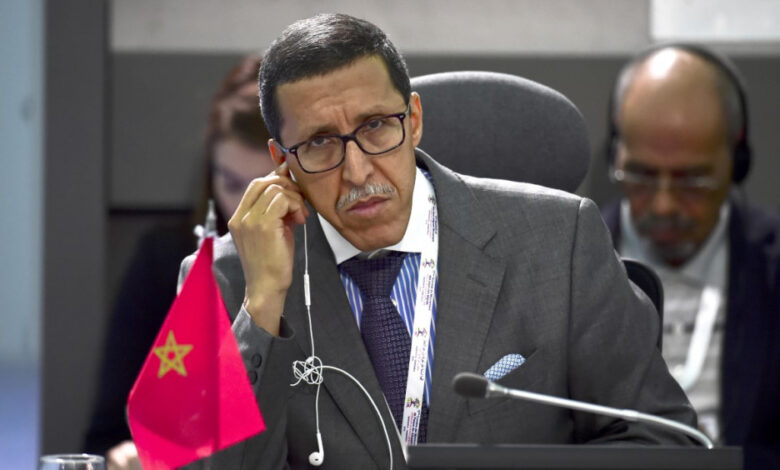
Opening Session of the Sixth Conference on a Nuclear Weapons-Free Zone in the Middle East
During the opening session of the Sixth Conference on the establishment of a nuclear weapons-free zone and other weapons of mass destruction in the Middle East, held for the first time outside the United Nations headquarters in Amman, Morocco’s ambassador to the UN, Omar Hilale, highlighted the unwavering commitment of His Majesty King Mohammed VI, President of the Al-Quds Committee of the OIC, alongside His Majesty King Abdullah II of Jordan, Guardian of the Holy Places in Al-Quds, towards regional peace, security, and stability.
Chairing the conference, Mr. Hilale praised the historical and fraternal bonds between Morocco and Jordan, emphasizing that the two kingdoms share a common vision for a peaceful and stable Middle East where states coexist in harmony.
In a tense international context marked by armed conflicts, a weakening of multilateralism, and repeated violations of international law, Mr. Hilale underscored the urgent need for a renewed collective commitment to creating a zone free of weapons of mass destruction in a region considered one of the most strategic in the world.
He acknowledged that this endeavor is complex but achievable, provided it relies on dialogue, diplomacy, and negotiation—the only means capable of building trust and laying the groundwork for a regional system of collective security.
The ambassador expressed the shared ambition of the participants to see the Middle East shift from a confrontational logic to a dynamic of cooperation, development, and common prosperity, insisting on the necessity of respecting international law and the sovereign commitments of states.
He also highlighted the accumulated experience from the five existing nuclear-weapon-free zones, representing over 100 countries, which can serve as an inspiration for the work of the third working committee.
This three-day session brings together experts, diplomats, researchers, and representatives of international organizations from the Middle East, Iran, Latin America, Africa, and Asia. It’s noteworthy, however, that Israel continues to boycott the conference despite receiving a formal invitation.