Spain Declares National Mourning Following Fatal Train Collision
Spain Observes Three Days of National Mourning Following Train Collision
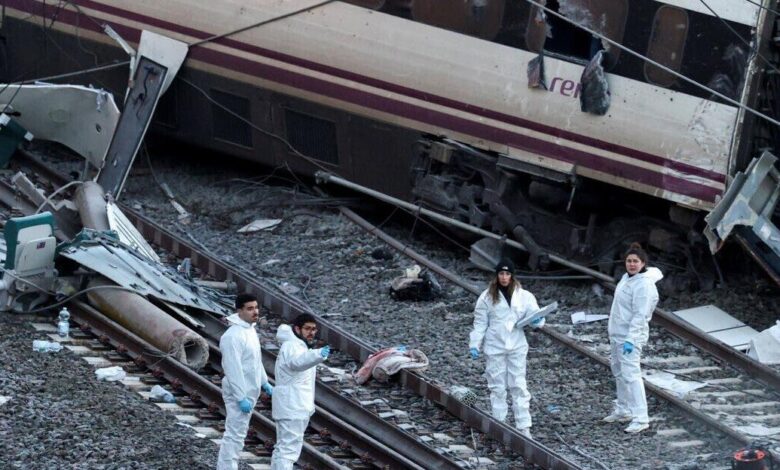
Spain has entered three days of national mourning starting Tuesday after a collision between two trains in Andalusia on Sunday, resulting in at least 41 deaths and dozens of injuries. Rescue operations continue at the scene of the tragedy, raising concerns about a potential increase in the casualty count.
Royal Family at the Victims’ Side
King Felipe VI and Queen Letizia visited the site of the accident dressed in black to show their solidarity with the families of the victims and the survivors. The royal couple also visited the Reina Sofía Hospital in Córdoba, where several injured individuals are receiving medical care.
A Heavy Yet Temporary Death Toll
According to Andalusian authorities, the current death toll stands at 41, while 39 people, including four children, remain hospitalized. Thirteen injured individuals are in critical condition in intensive care. Additionally, 43 reports of missing persons have been recorded, and the identification of the victims is ongoing.
Circumstances of the Tragedy
The accident occurred near Adamuz, about 200 kilometers north of Malaga, when a high-speed train operated by the private company “Iryo,” traveling from Madrid, derailed before colliding with a train from the national company “Renfe,” which was heading in the opposite direction toward Huelva. Both trains were carrying over 500 passengers and were traveling at speeds exceeding 200 km/h.
Investigation Launched Into Technical Causes
Transport Minister Óscar Puente described the accident as “particularly unusual,” emphasizing that the track in question had recently been renovated. Authorities have ruled out any possibility of sabotage or human error, favoring technical causes related to the infrastructure or rolling stock.
Government Promises Transparency
In light of public emotion and anger, Prime Minister Pedro Sánchez has promised “total transparency” in order to clarify the circumstances surrounding this railway disaster, the worst since the Santiago de Compostela accident in 2013.
Report Expected in Coming Months
A preliminary report on the causes of the accident may be published within two to three months, while definitive conclusions are expected within a maximum of one year, according to the Council of Industrial Engineers.