SRM: The Beni Ansar and Nador Grand Stations Enhance Resource Protection
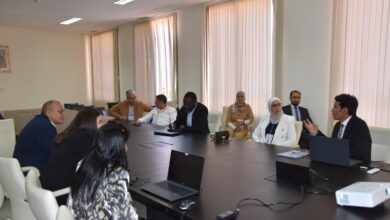
Mokhtar Jabbari Addresses Wastewater Treatment in Nador
Mokhtar Jabbari, the provincial director of the Regional Multi-Service Company of the Oriental in Nador, stated that the wastewater treatment plants in Beni Ansar and Nador Grand are directly contributing to the reduction of untreated wastewater discharges. This has a notably positive impact on the protection of water resources, particularly the Marchica Lagoon, which is regarded as one of the most sensitive ecosystems in the region.
In an interview with Al Aoula, Jabbari explained that the province of Nador currently has seven wastewater treatment stations in addition to 23 pumping stations. He noted that the Nador Grand station manages wastewater from several cities and municipalities, including Nador, Selouane, Zaïo, Al Aroui, and Taouima. Meanwhile, the Beni Ansar station treats wastewater from Farhana, Beni Ansar, and the Atalayoun tourist complex.
Jabbari added that the adoption of advanced treatment processes, encompassing primary, secondary, and tertiary treatments, has significantly reduced the pollutant load as well as organic and microbiological pollution. This improvement has enhanced the water quality and preserved the ecological balance, aligning with national objectives for the protection of sensitive natural environments.
In this context, Jabbari emphasized that these environmental projects improve the quality of liquid sanitation services in response to the demographic growth and urban expansion within the region. This is achieved through increased treatment capacities and the implementation of modern technologies, alongside plans to expand facilities to meet the growing demand and ensure service sustainability.
He also indicated that the organization is working on the reuse of treated waters for the irrigation of green spaces in several areas, notably in Nador, Beni Ansar, and Atalayoun. This contributes to the rational utilization of water resources and enhances urban aesthetics.
From a technical standpoint, the Beni Ansar treatment plant has a treatment capacity of about 7,000 m³ per day by 2030, benefiting nearly 86,000 residents, utilizing a low-load activated sludge biological treatment system. The Nador Grand station, on the other hand, has a daily capacity of approximately 34,000 m³, incorporating advanced steps such as fine filtration, disinfection through ultraviolet rays, and additional solutions for the treatment of phosphorus and nitrogen compounds.
Karim Dardour, head of operations at the Beni Ansar treatment station, explained that it includes primary treatment facilities designed to remove unwanted materials, before undergoing biological treatment to reduce organic pollution as well as nitrogen and phosphorus elements, in accordance with current environmental standards.
Along the same lines, Abdelatif Chaqrouni, an engineer specializing in high-performance station management at Beni Ansar, noted that these facilities are equipped with high-tech equipment and rely on sustainable solutions for sludge management, particularly through dehydration and recovery in industrial units, especially cement factories.
Saïd Izaouaou, a representative from the Bird Protection Research Group in Morocco, stated that the environmental impact of these stations is particularly noticeable at the Marchica Lagoon, classified as a site of ecological interest. He emphasized that the treated waters discharged now meet environmental standards and have contributed to the preservation of biodiversity.
According to various speakers, the Beni Ansar and Nador Grand stations thus serve as complementary models for liquid sanitation management through an environmental and sustainable approach, enhancing the protection of natural resources, improving quality of life, and supporting sustainable development processes in the Oriental region.