Tehraoui: Under the Leadership of His Majesty the King, Universal Health Coverage at the Heart of Morocco’s Social Project
Morocco’s Commitment to Universal Health Coverage Under King Mohammed VI
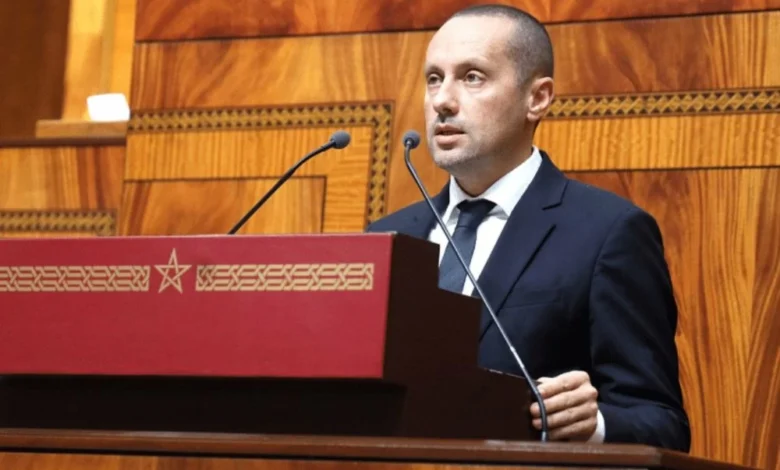
Morocco, under the visionary leadership of His Majesty King Mohammed VI, has placed Universal Health Coverage (UHC) at the forefront of its social agenda, Health and Social Protection Minister Amine Tehraoui stated on Saturday in Tokyo.
Speaking at a roundtable during the High-Level Forum on UHC 2025, Tehraoui highlighted the advancements made by the Kingdom in generalizing social protection, overhauling the national health system, and reinforcing the foundations for a sustainable and equitable UHC by 2030.
Tehraoui noted that mandatory health insurance currently covers approximately 88% of the population, integrating over 22 million new insured individuals, including self-employed workers and vulnerable groups.
He emphasized that the Royal Social Protection project goes beyond the recognition of new rights; it involves strengthening a more robust and deeply restructured healthcare system.
In line with the High Guidance of His Majesty King Mohammed VI, the expansion of social coverage must necessarily accompany a profound transformation in the organization and delivery of care, he stressed.
In this context, Tehraoui pointed out that Morocco has embarked on an ambitious overhaul of its national health system, structured around four strategic pillars.
The first pillar focuses on strengthening governance, realized through the establishment of new institutions and clarification of responsibilities at both national and territorial levels, in order to bring public decision-making closer to the actual needs of citizens.
The second pillar, he continued, pertains to upgrading the healthcare offer, notably through modernizing university and regional hospitals, rehabilitating primary health centers, and enhancing territorial equity in access to essential services.
He also emphasized the central role of human resources, the third pillar of this reform, highlighting the need to increase training capacities, revise curricula to meet current population needs, and improve working conditions to retain and motivate healthcare professionals.
The fourth pillar revolves around digital transformation, enabled by the implementation of an integrated information system and a Shared Patient Record—essential tools to ensure continuous monitoring of citizens and support better planning and more effective decision-making.
These structural reforms create a conducive environment for developing new partnerships, noted the minister.
Addressing the issue of financing, Tehraoui recalled that national expenditures dedicated to the sector have steadily increased in recent years, contributing to improved health indicators and reducing the direct financial burden placed on households.
He specified that the budget of the Ministry of Health and Social Protection has more than quadrupled between 2010 and 2026, reaching 42.4 billion dirhams, which constitutes 8.8% of the general state budget, reflecting "the government’s firm commitment to support ongoing reforms."
However, Tehraoui insisted that the challenge also lies in improving the quality of expenditure and preserving the financial sustainability of the system, emphasizing three major priorities for the Kingdom in this regard.
These priorities include maintaining the financial integrity of mandatory health insurance schemes, ensuring strong state support for vulnerable populations, and streamlining medical costs through enhanced prevention, promotion of primary care, and proximity of frontline services.
Regarding international cooperation, Tehraoui reaffirmed that Morocco remains fully committed to playing its role as a leader in UHC in Africa, particularly through South-South cooperation.
The Kingdom shares its experience in health financing, social protection, and human resource development to assist countries on the continent in building more robust, equitable, and resilient health systems, he stated.
Morocco’s participation in the High-Level Forum on UHC is part of an international initiative to develop National Health Pacts. The Kingdom is one of 21 countries engaged in this effort, which aims to adopt specific indicators to monitor progress toward UHC.
In this context, Tehraoui reiterated Morocco’s commitment to implementing its National Health Pact through concrete actions focused on reducing financial barriers, modernizing infrastructure, investing in human resources, and mobilizing innovation and private investment in the health value chain.
The roundtable also featured Elijah Julaki Muchima, Minister of Health of Zambia, and Ratu Atonio Rabici Lalabalavu, Minister of Health and Medical Services of Fiji, along with representatives from the private sector and international financial institutions.
Co-organized by the Japanese government, the World Health Organization (WHO), and the World Bank Group, this high-level forum serves as a strategic dialogue platform bringing together health and finance ministers to advance UHC through innovative reform and financing approaches.