The ‘Support Fund for Very Small Enterprises’: An Enticing Promise, an Excluding Reality
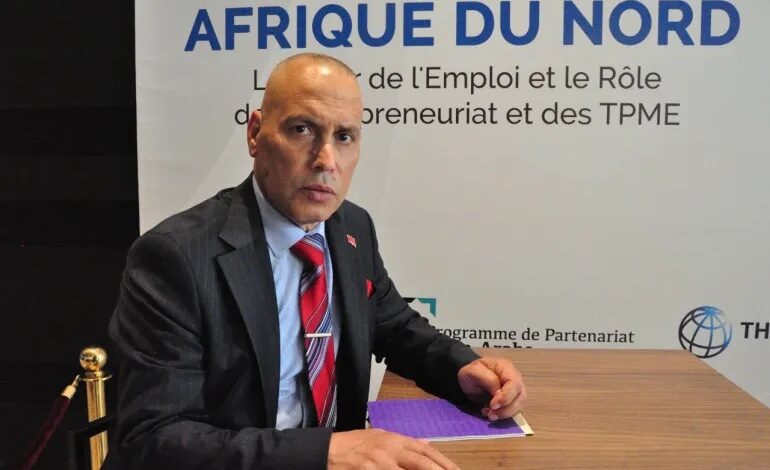
Moroccan Confederation of Very Small, Small, and Medium Enterprises Questions New Investment Fund
The Moroccan Confederation of Very Small, Small, and Medium Enterprises (TPE-PME) believes that the new investment support fund launched by the government "appears to be a theoretical opportunity rather than a real solution," emphasizing that "the access conditions set by the authorities automatically exclude the vast majority of very small Moroccan enterprises."
According to the Confederation’s statement, "the requirement of a minimum investment of one million dirhams renders 99% of very small enterprises ineligible," noting that these businesses "suffer from structural fragility, a lack of capital, and insufficient bank guarantees, preventing them from meeting the threshold needed."
The statement also highlights that "the official discourse accompanying the fund’s launch in Errachidia has left a bitter taste among young entrepreneurs," adding that "the remarks made by the head of government regarding the ease of access to bank financing indicate a disturbing ignorance of the economic and social realities faced daily by small entrepreneurs."
Furthermore, the Confederation criticizes the banks for imposing "excessive and often disproportionate conditions," stating that "the guarantees requested can sometimes exceed three times the amount of the loan sought." It also recalls that "high interest rates and the classification of TPEs as high-risk enterprises render any effort to promote investment meaningless."
The Confederation warns: "If the government continues to overlook the difficulties faced by this category of entrepreneurs while favoring dialogue with business leaders, it risks provoking very small enterprises to express their anger in the streets, alongside other marginalized groups."
Additionally, the Confederation raises concerns about the provisions of the 2026 Finance Bill, claiming it "maintains a clear fiscal imbalance." It explains that "the increase in taxes on very small enterprises from 10% to 20% places them on par with large corporations, whose tax rate has been reduced from 35% to 20%," which it characterizes as a "flagrant fiscal injustice."
The Confederation adds: "Large companies enjoy easy access to credit, public markets, and real estate, along with constant government support, while TPEs struggle merely to survive and avoid bankruptcy." It also reminds us that "the cessation of the Intilaka and Forsa programs has only exacerbated the situation."
"The government’s recent decisions jeopardize the country’s economic and social stability," warns the Confederation, recalling that "over 40,000 enterprises went bankrupt in 2024, with 99% of them being very small enterprises," and that "this figure could exceed 50,000 in 2025."
In light of this situation, the Confederation urges the government to "acknowledge the mistakes in the design and implementation of support programs" and to "open an inclusive national dialogue with representatives of very small enterprises." It also recommends the creation of "a public bank dedicated to TPEs, modeled after the French experience Bpifrance."
The Confederation further proposes to "revise the access conditions for the fund to align them with the real capacities of TPEs," to "implement a fairer and more progressive taxation system," and to "simplify administrative procedures while ensuring transparency in the distribution of public aid."
In conclusion, it states:
"The role of TPEs in the Moroccan economy is essential: they represent a dominant part of the entrepreneurial fabric and employ the majority of the active workforce. By excluding them from support measures, the government jeopardizes not only their survival but also the economic and social stability of Morocco."