The Trade War Initiated by Donald Trump: What Impact on the Global Economy and Morocco?
Jawad KERDOUDI – President of IMRI
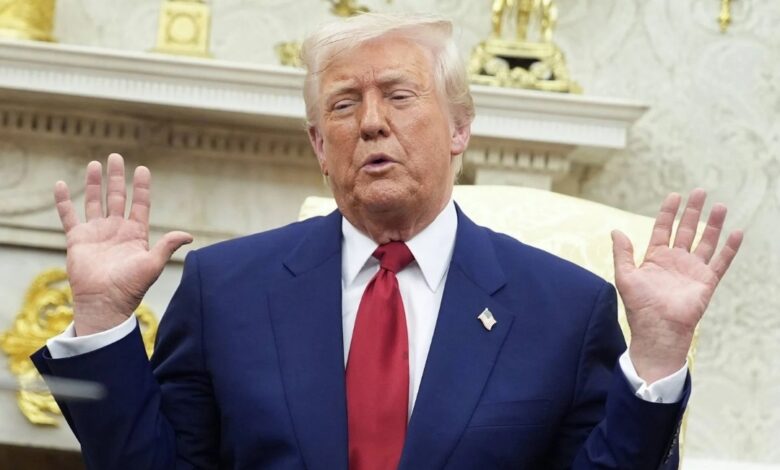
On April 2, 2025, U.S. President Donald Trump announced new tariffs. Effective April 5, 2025, all products imported into the United States will be subject to a 10% tariff. Previously, Trump had imposed tariffs of 25% on steel, aluminum, and automobiles. The new tariffs will take effect starting April 9, 2025, and will apply to all countries. Trump described April 2, 2025, as "Liberation Day," asserting that the U.S. has been cheated by foreign nations and companies for many years. According to the U.S. President, the primary goals of this significant tariff increase are to reduce the U.S. trade deficit, which reached $1.203 trillion in 2024, and to encourage the repatriation of American and foreign businesses that export to the U.S. This aims to stimulate the reindustrialization of the country and create jobs. Additionally, these tariff increases are expected to boost federal revenue, reduce the budget deficit, and lower taxes. However, these unilateral tariff increases contradict international law and the rules of the World Trade Organization (WTO), as well as free trade agreements signed by the U.S. with several countries. They also violate the principle of non-discrimination as they vary from country to country.
Trump’s strategy, based on reciprocity and unprecedented thus far, involves dividing the U.S. bilateral trade deficit with a specific country by the value of imports from that country, then dividing the result by two. This approach has faced criticism from economists who deem it overly simplistic and damaging to international trade relations. They argue that this method overlooks the complexities of global supply chains and risks provoking retaliatory measures from U.S. trading partners. The resulting tariffs are astronomical, reminiscent of the rates seen in the 1930s, such as 54% for China, 49% for Cambodia, 46% for Vietnam, and 44% for Sri Lanka. Even America’s allies are not exempt: 32% for Taiwan, 31% for Switzerland, 25% for South Korea, 50% for Saint Pierre and Miquelon, 24% for Japan, and 20% for European Union countries. Regarding African nations, Trump has eliminated the African Growth and Opportunity Act (AGOA), enacted by the U.S. Congress in 2000 under President Bill Clinton. This agreement exempted thousands of products made in Sub-Saharan Africa from U.S. tariffs. While most African countries will only be taxed at 10%, others will face prohibitive tariffs like 47% for Madagascar, 32% for Angola, 31% for Libya, 30% for Algeria and South Africa, and 28% for Tunisia. Additionally, some Arab nations will endure high tariffs: 41% for Syria, 39% for Iraq, and 20% for Jordan.
Morocco, however, has been relatively spared, with tariffs set at 10%, despite a free trade agreement signed in 2006 that provided tariff exemptions. This is due to the 20% VAT being treated as a customs duty, halved to result in a 10% tariff rate. Morocco’s exports to the U.S. account for only 3% of its total exports, valued at 12.65 billion dirhams. These primarily consist of phosphates, fish and seafood, fruits and vegetables, electronic components, semiconductors, electrical machines and devices, automotive and aeronautical parts, and handicrafts. Imports from the U.S. represent 8.4% of Morocco’s total imports, equating to 60.31 billion dirhams, mainly comprising crude oil, medical and pharmaceutical products, engines, aircraft and associated equipment, and natural gas. However, like all other countries, the export of Moroccan automobiles to the U.S. will be subjected to a 25% tariff.
Thus, the new 10% tariff on Moroccan exports to the U.S. is unlikely to have a significant impact. This situation could create opportunities for Morocco, as its exported products will be taxed at only 10%, compared to a 20% tax on similar products from the European Union. This could also attract investments to Morocco from China and the EU, looking to take advantage of the 10% tariff into the U.S. market.
Trump’s decision has had an immediate negative effect on global stock markets: Argentina’s stock market fell by 7%, Milan by 6.53%, Wall Street by 6%, Frankfurt and London by 4.95%, Mexico by 4.8%, and the CAC 40 by 4.6%. Additionally, oil prices plummeted below $60 a barrel, marking the largest drop since 2021. Other effects of this decision include rising prices in the U.S., leading to inflation, a downturn in international trade and overall global growth, and potentially even a recession. Jerome Powell, the chair of the Federal Reserve, commented on April 4, 2025, that the tariff hike could result in less growth, more inflation, and higher unemployment, and he is reluctant to lower interest rates as requested by Trump. Notably, the U.S. debt in 2024 stood at $35.294 trillion against a GDP of $29.167 trillion, resulting in a debt-to-GDP ratio of 121%.
The response from nations affected by Trump’s decision to increase tariffs has been overwhelmingly negative worldwide. China has announced an immediate 34% tariff on U.S. imports. European Commission President Ursula Von der Leyen stated that the White House’s decision is a "serious blow" to the global economy, predicting "disastrous consequences for millions of people, particularly the most vulnerable." She announced that the EU is already working on "a new package of countermeasures." Japan’s trade minister labeled the new U.S. tariffs as "extremely regrettable," while the Japanese Prime Minister has requested a tariff exemption, given that Japan is the largest foreign investor in the U.S.
In conclusion, it is regrettable that these measures have been implemented unilaterally by the U.S. President without any consultation and in disregard of international law and institutions. They could provoke a global economic crisis with severe repercussions, particularly for emerging and developing countries. Protests have already erupted in several U.S. cities, criticizing Trump’s authoritarian regime, the isolation of the U.S. through the elimination of USAID, and the dismissal of thousands of federal employees. It is hoped that he will revert to consultation and negotiation with the U.S.’s main partners. Already, 50 countries have requested negotiations regarding the level of tariff increases.