Morocco Bets on Green Hydrogen to Strengthen Its Energy and Industrial Sovereignty
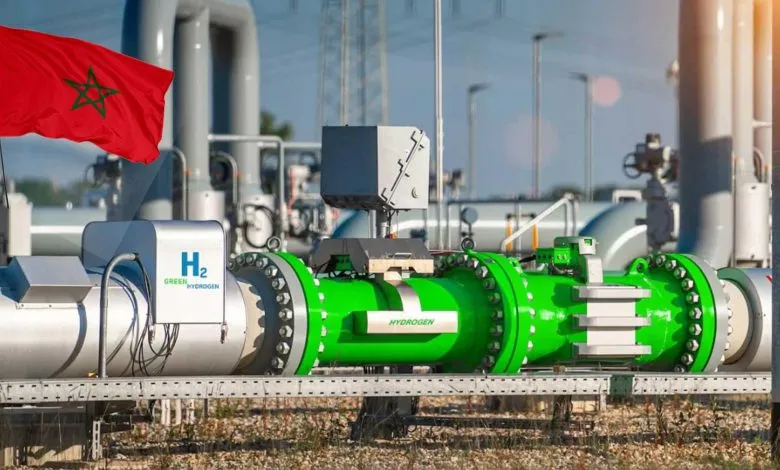
Morocco is accelerating its strategy in the field of green hydrogen to position itself as a major player in the production of e-fuels and clean energy derivatives, amidst a global context where the sector is still struggling to realize its ambitions.
An Ambitious Investment Strategy
With approximately $32 billion in committed investments, the Kingdom is adopting a structured approach aimed at transforming its potential into concrete industrial results. This dynamic relies on an integrated value chain that spans from the production of renewable energies to the local transformation into e-methanol and e-ammonia.
A Strategic Position in the Global Market
Morocco ranks among the most active countries in public investments related to green hydrogen, placing it behind Germany and ahead of several European nations. This position is attributed to its natural assets (sunlight, wind), its strategic geographical location, and its developing port infrastructure.
The goal is not merely the export of raw hydrogen but the production of high-value-added products intended primarily for European markets.
Reducing Import Dependence
The Kingdom imports nearly $2 billion worth of ammonia each year, an essential input for the fertilizer industry. Producing green ammonia from renewable hydrogen would reduce this dependence while strengthening national industrial sovereignty.
The goals set are ambitious, aiming for the production of one million tons of green ammonia by 2027 and three million tons by 2030.
Infrastructure Deployment and Desalination
To support this transition, a comprehensive desalination program is underway, with plans for 17 stations by 2026 and an expected capacity of 1.7 billion cubic meters per year by 2030.
Additionally, e-methanol is identified as a strategic product, particularly for the decarbonization of maritime transport and the chemical industry.
Regulatory and Technological Challenges
Despite these advancements, several obstacles persist, particularly regarding European regulatory frameworks, where strict requirements govern the production of e-methanol, especially concerning the origin of the CO₂ used.
On the technological front, limitations related to the Haber-Bosch process, used for ammonia production, continue to hinder industrial optimization, opening the door for the search for more innovative and decentralized solutions.
Strengthened Partnership with the European Union
Cooperation between Morocco and the European Union is strengthening, with growing interest from European buyers in Moroccan projects related to green hydrogen. Financial and technical support is also being provided for reforms and research in this sector.
Toward a Regional Energy Hub
The development of a dedicated hub in the Guelmim-Oued Noun region illustrates the Kingdom’s desire to structure an integrated sector in the southern provinces while enhancing its role in the global clean energy trade.