Moroccan Dams: The New Frontier of Floating Solar Energy
A Groundbreaking National Study Reveals That Covering Just 1% of Reservoir Surface Could Generate Significant Electricity — and Save Nearly One Billion Cubic Meters of Water Annually
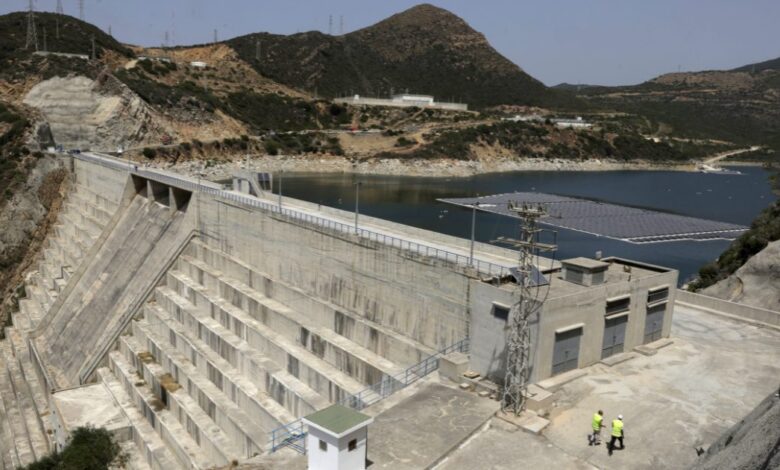
On a summer morning at the Al Wahda Dam in the Ouazzane province, the sun beats down relentlessly. The reservoir sparkles, but this light is not just shimmering — it is evaporating. Millions of cubic meters of water vanish into Morocco’s dry air every year, silently and largely unnoticed. Researchers from Sidi Mohammed Ben Abdellah University in Fez decided it was time to quantify this loss — and propose a solution.
Published in May 2026 in the journal npj Clean Energy, their study is the first to assess the potential of floating photovoltaic systems (FPV) across 58 Moroccan dams on a national scale. The findings are striking: these existing infrastructures could become a cornerstone of the Kingdom’s energy transition.
One Million Cubic Meters Lost Each Year
Morocco has around 152 large reservoirs, with a total capacity of 19.9 billion cubic meters. These reservoirs are crucial for drinking water, irrigation, and hydropower, yet they suffer in silence. Evaporation, exacerbated by increasingly hot summers and declining rainfall, leads to colossal losses.
The researchers estimated this loss at 909 million cubic meters per year for the 58 dams studied, covering a total area of 433 square kilometers. In July alone, losses peak at 108 million cubic meters in a single month. The Al Wahda Dam, the largest in the country, suffers the most, losing nearly 184 million cubic meters annually.
Installing floating solar panels on these reservoirs offers a dual solution: generating green electricity and reducing evaporation by shading the water’s surface. Experiments in Spain, Jordan, and India have already demonstrated evaporation reductions ranging from 25% to 60%, depending on the coverage rate.
40% Coverage for 100% of Electrical Needs
The most striking figure from this study: covering 40% of the total surface area of Moroccan dams would produce enough electricity to meet the entire national consumption — an estimated 42.38 TWh in 2023, according to the Ministry of Energy.
However, the researchers do not advocate for immediate large-scale coverage. They show that with just 1% coverage, FPV installations would already produce significant amounts of electricity, contributing to the national grid at a controlled cost. "Even a small-scale installation can have a considerable impact," they point out.
The panels selected in the study are polycrystalline cells with a 16% efficiency, chosen for their cost-effectiveness and suitability for large surfaces. An added advantage: contact with water naturally cools the panels, enhancing their efficiency by 1.5% to 2% compared to land-based installations — a notable gain under the Moroccan sun.
The Transformative Angle
The study also examined a technical detail with real implications: the tilt angle of the panels. Theoretically, a 31-degree angle maximizes solar energy production in Morocco. However, the researchers prefer 11 degrees for practical calculations.
The rationale is twofold: a low angle better shades the water’s surface (reducing evaporation) and makes the floating structures more stable, thus less expensive to build and maintain. The difference in production between 11° and 21° is considered "minimal" — a reasonable compromise between energy performance and water conservation.
Return on Investment in Under 10 Years
From a financial perspective, the study compares two floating platform technologies: Ciel & Terre (C&T), a leading French firm, and Solaris Synergy, an Israeli startup. The costs associated with a FPV project include solar modules ($0.22/Wc), inverters, wiring, civil engineering, and maintenance.
The verdict: the Solaris Synergy solution offers the best cost-to-capital ratio, with float costs half that of C&T ($0.10 vs. $0.20/Wc). Financial projections indicate a return on investment in under 10 years, considering maintenance costs estimated at 10% of capital expenses over the lifespan of the installations.
However, the authors caution that these projections are sensitive to operating costs — which are poorly documented in current literature — and electricity sales prices.
Morocco Already in the Race
The Kingdom is not waiting. A prototype FPV system has been installed in Sidi Slimane (360 kW) — the first of its kind in Africa. A 13 MW project is underway at the Oued Rmel Dam in Tangier, aiming to cover 14% of the energy needs for the Tanger-Med port complex.
Until now, these initiatives have been isolated, lacking a comprehensive vision. This study fills that gap: by mapping the 58 dams on a national scale for the first time, it provides Moroccan decision-makers with an unprecedented database to plan FPV deployments in line with the country’s goals — 52% renewable energies by 2030.
Challenges Not to Be Overlooked
The researchers are candid about the limitations of their work. Data regarding dam depths — critical for designing anchoring systems — were lacking. The impact of prolonged droughts, a significant risk in Morocco, could not be modeled. And FPV production remains susceptible to weather fluctuations: clouds, seasonal variations.
To stabilize supply, the study suggests two avenues: pumped hydro storage (reinjecting water into the dam during off-peak hours for peak turbine operation) and green hydrogen, produced through electrolysis using solar surplus. Both technologies are gaining interest in Morocco.
An Urgent Water-Energy Equation to Solve
In a country facing both water stress and a rapidly growing electricity demand, floating photovoltaics are not a technological fancy. They represent a concrete response to two interlinked crises.
Less evaporation means more water available for agriculture and consumption. More solar electricity translates to reduced reliance on hydrocarbon imports. Moreover, the infrastructure — the dams — already exists. What’s lacking is political will and financing to scale up.
As the researchers summarize: "Covering just 1% of the total surface area of the monitored dams could make a substantial contribution to Morocco’s energy needs, with a quick return on investment." Just one percent. The rest is merely a matter of time.