Morocco Bets on Desalination to Never Face Water Shortages Again
A Historic Move: Morocco Signs Agreement to Build Its Own Desalination Industry
In light of prolonged droughts and dwindling aquifers, Morocco has recently signed a historic agreement to establish its own desalination industry. This marks a significant turning point in how the kingdom perceives its water sovereignty.
As revealed by L’Économiste in its May 12, 2026 edition, Morocco currently desaltes only 320 million cubic meters of seawater per year. By 2030, the aim is to increase this capacity to 1.7 billion cubic meters—more than five times its current capability within less than a decade. This is not merely a campaign promise; it is an ongoing project supported by an official framework agreement signed with key players in the sector, with initial plants expected to be operational by 2027.
The message is clear: for Morocco, the availability of water can no longer rely solely on rainfall.
When Rain Is No Longer Enough
Climate change has fundamentally altered the landscape. Winters are shorter, rainfall is increasingly erratic, and dams—which once formed the backbone of national water policy—are experiencing dangerously fluctuating levels. In this context, continuing to rely exclusively on natural resources would be imprudent.
Consequently, the government has opted for a proactive strategy. The agreement signed this week with industry stakeholders involves not just the construction of new plants; it aims to create a comprehensive national desalination sector with components manufactured in Morocco, by Moroccan companies or those established in the country.
“This strategy will not only secure our water supply but also create local value and enhance our industrial autonomy,” stated an official from the Ministry of Equipment and Water.
From 35% to 70%: The Industrial Imperative
Currently, L’Économiste notes that local integration in the desalination sector hovers between 30% and 35%. In other words, two-thirds of the equipment, technology, and components used in Moroccan facilities are imported. The stated goal is to elevate this ratio to 70% by 2030—a leap that requires innovation, training, technology transfers, and large-scale industrial partnerships.
This is where the framework agreement becomes especially meaningful. It’s not merely about constructing plants; it’s about fostering a competitive industry capable of exporting its expertise to African and Middle Eastern markets. Desalination represents not only a pathway to independence but also a means to bolster economic prominence.
Concrete Projects with Tight Deadlines
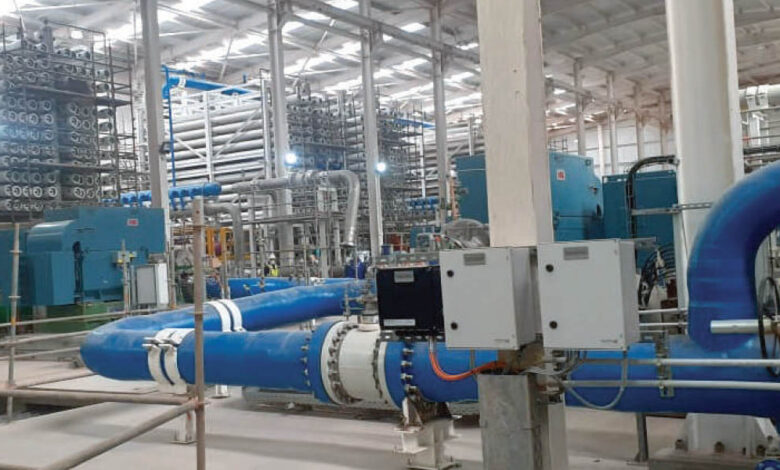
On the ground, projects are already underway. Four new desalination plants are being constructed in Nador, Tangier, Rabat, and Casablanca, with a combined capacity of 540 million cubic meters per year. Their commissioning is anticipated before 2027, presenting a tight yet realistic timeline given the investments involved.
The ultimate goal is ambitious: to increase the share of desalinated water in the national drinking water supply from 25% today to 60% by 2030. This represents a profound shift in logic: seawater, once a last resort, would become the primary source of supply for Moroccan households.
Solar Power to Energize the Stations
An immediate concern arises: desalination is highly energy-intensive. Morocco has anticipated criticism on this front. The new plants will be powered by renewable energies, particularly solar, adhering to the commitments outlined in the national energy transition strategy.
This coherence is significant. It reflects an integrated vision where water and energy policies no longer oppose each other but instead mutually reinforce one another. The upcoming port in Tan-Tan, dedicated to the export of green hydrogen and ammonia, follows this same philosophy of convergence.
Aquifers, Interconnected Basins: A Multi-Faceted Strategy
Desalination is just one pillar of a broader strategy. Morocco is concurrently implementing several complementary projects to secure its water resources for the long term.
Groundwater management contracts will regulate and limit excessive withdrawals, particularly from unregulated wells that have depleted aquifers for decades. Hydraulic interconnections between watersheds are being expedited, starting with the link between the Sebou and Bouregreg rivers, two major waterways in the north and center of the country. Additionally, institutional strengthening measures are being undertaken to prepare for climate scenarios that could be even more severe than those already experienced.
A Bet on the Future
What stands out in this strategy is its refusal to succumb to resignation. Faced with a changing climate, Morocco is not merely enduring; it is investing, industrializing, and planning. The gamble is risky—the timelines are ambitious, the financial commitments considerable, and the technical challenges real. Yet the alternative—waiting for the next drought in hopes that it will be less severe—is not a viable option.
Water will remain at the center of tensions in the 21st century. Morocco has chosen to ensure it won’t run short.