Informal Sector in Morocco: Over 75% of Employment Still Evades Contributory Channels
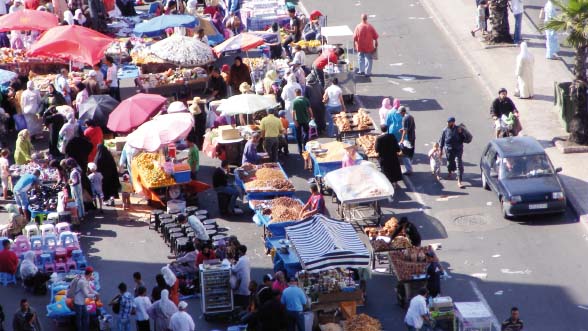
In Morocco, the informal sector continues to significantly dominate the labor market. According to data from the High Commission for Planning (HCP), over 75% of total employment still falls outside contributory circuits, meaning that the majority of workers are not affiliated with social security or tax contribution systems.
This situation presents a major challenge for public policies, especially in a context where the country is accelerating efforts to broaden social protection and modernize its tax system.
A Labor Market Still Heavily Unbalanced
The weight of informality can largely be attributed to the very structure of the Moroccan economy, characterized by a strong presence of micro-activities that are often poorly capitalized and have low productivity.
Many workers are engaged in independent or family-run activities without official declaration, limiting their access to social coverage, bank credit, and legal protection.
A Barrier to Growth and Public Revenues
The significance of informal employment has direct consequences on public finances and overall productivity. By remaining outside formal circuits, a large portion of economic activity evades taxes and social contributions.
This situation reduces the state’s ability to finance public services and hinders the expansion of the contributory base, which is essential for the sustainability of Morocco’s social model.
A Social Buffer Despite Everything
Despite its limitations, the informal economy also plays a role as a social buffer. It enables millions of people to earn an income, albeit precarious, in a context where the formal job market cannot absorb all the demand.
Without this sector, the unemployment rate would be significantly higher, especially among young people and in urban areas with high demographic pressure.
A Slow Transition to Formalization
Authorities have initiated several reforms to encourage formalization, including the digitalization of tax services, the development of a self-employed status, and administrative simplification.
However, experts believe that this transformation remains gradual and heavily depends on the economy’s ability to create more stable and productive jobs.
A Strategic Challenge for the Moroccan Development Model
Reducing the weight of the informal sector is now seen as a central issue for economic and social policies. It directly influences the success of universal social protection, the improvement of public revenues, and the upgrading of the national economy.
In this context, the formalization of employment remains one of the most important structural challenges for Morocco in the coming years.