Morocco: The “Big Industrial Leap” Commended by the World Bank
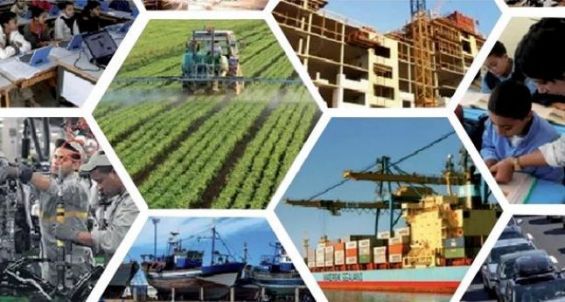
Morocco is gradually establishing itself as one of Africa’s key industrial hubs, particularly in the automotive, aerospace, chemical, and electronics sectors. This advancement, referred to as a “great leap” by the World Bank, contrasts sharply with a persistent weakness: the Kingdom operates within the Arab Maghreb Union (UMA), regarded as the least integrated regional space on the continent.
This is one of the main findings of the World Bank report titled “Integrating Africa: From Threads to Hubs”, which focuses on the evolution of regional and global value chains in Africa.
Morocco’s Position in Global Value Chains
While intra-African trade remains limited, Morocco has successfully strengthened its integration into global value chains. According to the World Bank, only four African countries exceed the threshold of 10% of their gross exports in terms of upstream participation in global value chains: Kenya, Morocco, South Africa, and Tunisia.
For Morocco, this integration is primarily based on automotive and aerospace components, supported by export free zones and the presence of international supply and buyer networks.
Between 2015 and 2019, Morocco generated an average of $496 million in exports related to regional value chains, ahead of Tunisia at $459 million, Egypt at $445 million, Angola at $311 million, and Algeria at $282 million.
Automotive, Aerospace, and Chemicals: An Industry in Ascendance
The World Bank emphasizes the transformation of Morocco’s industrial fabric. The Kingdom has successfully positioned itself in activities that demonstrate increasing complexity, particularly in chemicals, electronics, automotive components, and aerospace.
In the processed chemicals sector, which represents one of the most dynamic regional value chains with $2.7 billion in flows related to plastics, fertilizers, and chemical products, Morocco is among the key drivers on the continent alongside Egypt and South Africa.
This industrial progress is attributed to a combination of several factors. The World Bank highlights the cooperation between public and private sectors, Morocco’s geographical proximity to Europe, and the quality and alignment of its infrastructure.
This configuration has enabled the Kingdom to develop a comparative advantage in several sectors with medium complexity and to strengthen its presence in aerospace components and automotive wiring.
A Paradox: A Strong Industry Amidst a Low-Integrated Region
Morocco’s industrial success sharply contrasts with the level of economic integration in its regional environment.
The World Bank indeed regards the Arab Maghreb Union as the least integrated regional economic community in Africa, with intraregional trade amounting to less than 5%.
At the continental level, only 20% of African exports are destined for other African countries. This level remains significantly lower than what is observed within the European Union or ASEAN, where intraregional trade exceeds 50% of exports.
For the World Bank, this low Maghreb integration is primarily explained by political fragmentation, persistent tensions among countries in the region, and the lack of sufficiently effective institutional mechanisms to coordinate economic policies.
The Maghreb Possesses Numerous Advantages
The paradox is even more pronounced as Maghreb countries have several favorable conditions for deeper economic integration: geographical proximity, a widely shared language, and the potential to enhance trade and financial exchanges.
The report thus suggests that the challenges in the Maghreb are more linked to political economy than geography. In other words, the obstacles to integration are not tied to a lack of economic complementarities but primarily to political and institutional choices.
Sectorally, the UMA also shows a particular specialization in heavy manufacturing and chemicals, unlike other African regional blocs that are more oriented towards extractive industries, agro-processing, textiles, or light industries.
Morocco Has a Strategic Network of Trade Agreements
Another advantage highlighted by the World Bank is that Morocco benefits from a particularly dense network of preferential trade agreements.
The Kingdom is among the African countries with the most developed network of agreements, ranking similarly to the United Kingdom and behind Egypt according to the indicators used in the report.
This trade openness is a significant asset for companies operating in Morocco, as it allows them to access various international markets and more easily integrate into global value chains.
Morocco is also recognized, along with South Africa, as one of the “anchor suppliers” in terms of carbon markets and green standards on the African continent.
Energy: Another Reflection of the Integration Deficit
The energy sector similarly illustrates the gap between available capabilities and the actual level of regional cooperation.
According to the World Bank, North Africa has relatively sophisticated electrical networks and advanced technical capabilities. Yet, electricity exchanges among African countries in the region remain very limited.
Political fragmentation and differences in regulatory frameworks continue to hinder the establishment of a true regional electricity market.
For the authors of the report, the main challenge is not the production capacity or the existence of infrastructure, but rather the establishment of institutional, regulatory, and political conditions necessary to transform these infrastructures into an integrated regional energy market.
Morocco Faces Untapped Regional Potential
The report “Integrating Africa: From Threads to Hubs” ultimately highlights a paradoxical situation. Morocco has managed to make several strides in its industrial transformation and to approach the standards of major global value chains.
The automotive, aerospace, chemicals, electronics, and industrial technologies sectors reflect this ascent.
However, this performance is surrounded by a regional environment where exchanges remain weak. For the World Bank, the Moroccan case thus illustrates a broader challenge for Africa: economic and industrial capacities exist, but their full potential will depend on countries’ ability to overcome the political and institutional blockages that continue to hinder regional integration.