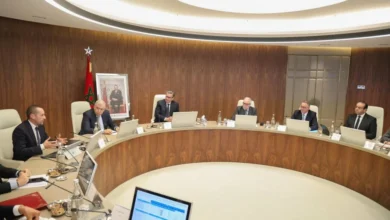
Commercial Code: The Commission Approves Bill 71.24

The Justice, Legislation, Human Rights, and Freedoms Commission in the House of Representatives adopted Bill No. 71.24 on Wednesday, amending and supplementing Law No. 15.95, which forms the Commercial Code. The text, presented by the House of Councilors during a second reading, garnered 9 votes in favor, 5 against, and no abstentions, following the introduction of four amendments affecting two articles.
STRENGTHENING THE LEGAL SECURITY OF TRANSACTIONS
The bill introduces new provisions aimed at enhancing the flexibility of financial transactions, particularly among traders. Its primary objective is to bolster legal security, improve the efficiency of the financial system, and better regulate payment instruments.
PREVENTIVE JUSTICE AND THE ROLE OF BANK AL-MAGHRIB
Presenting the text, Minister of Justice Abdellatif Ouahbi emphasized that this reform reinforces the principle of preventive justice by making reliable data available to inform the relevant parties. It also strengthens the preventive role of Bank Al-Maghrib, notably through the centralization of data related to payment incidents and the handling of returned checks and promissory notes.
REDUCING CASH USAGE AND COMBATING ILLEGAL PRACTICES
According to the minister, the main goals of the reform focus on decreasing the reliance on cash in financial transactions to enhance transparency, combat money laundering, and prevent tax evasion, all while promoting the broader use of commercial effects. The aim is to encourage financial inclusion and economic integration.
CRIMINAL TRANSACTION AND REVIEW OF SANCTIONS
The bill establishes criminal transactions at all stages of the procedure, including during the enforcement phase of the sentence. Consequently, payment or withdrawal of a complaint can lead to the suspension or cancellation of public action. When this occurs following an irrevocable judicial decision, it terminates the effects of that decision.
PARTIAL DECRIMINALIZATION AND THE PRINCIPLE OF PROPORTIONALITY
The text provides for the partial decriminalization of offenses when the facts concern spouses, ascendants, or descendants in the first degree. It also establishes the principle of proportionality between the severity of the offense and the penalty, with sentences now ranging from 6 months to 3 years, as opposed to the previous range of 1 to 5 years.
DISTINCTION BETWEEN TYPES OF OFFENSES
A clear distinction is made between cases of insufficient funds or failure to maintain funds, and more serious offenses such as forgery or counterfeiting of checks, allowing for differentiated legal treatment.
NEW RULES FOR THE PROMISSORY NOTE
The bill also establishes specific rules for promissory notes drawn on a banking institution, aimed at strengthening the protection of beneficiaries and increasing trust in this payment instrument.
INCREASED RESPONSIBILITIES FOR BANKING INSTITUTIONS
Under the new text, banking institutions are assigned an enhanced role, encompassing the issuance of checkbooks, verifying the drawer’s status regarding payment incidents, and reclaiming checkbooks in the event of repeated incidents.