Archiving the Moroccan City: Launch of Study Days
Archiving the Moroccan City: Launch of the Study Days
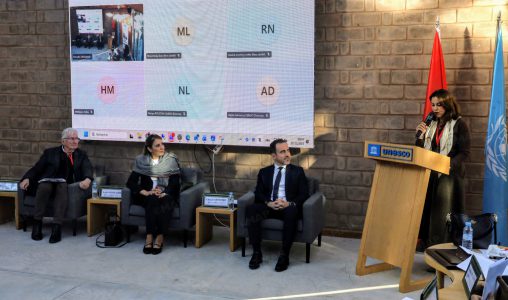
The “Archiving the Moroccan City” study days were inaugurated on Thursday in Rabat, with the presence of institutional officials, historians, architects, archivists, researchers, academics, and urban planners. Organized over two days (November 27 and 28) by the Archives of Morocco, in partnership with the UNESCO office in the Maghreb and the École nationale des chartes (France), the event aims to explore modern approaches to collecting, preserving, and promoting archives related to Moroccan urban heritage.
An Essential Urban Heritage to Preserve
In her speech, Latifa Moftaqir, Director of the Archives of Morocco, underscored the strategic importance of architectural and urban archives for understanding the evolution of Moroccan cities. She highlighted that these documents form an indispensable foundation for guiding public policies, documenting territorial transformations, and transmitting a reliable memory of the Kingdom’s urban identity.
According to her, the purpose of these days is to create a space for exchange around several priority issues: the collection of historical documents, archival description, physical and digital preservation, and the promotion of architectural collections. This approach requires close coordination between institutions, professionals, and researchers.
A Space for Learning and Cooperation
Ms. Moftaqir also emphasized the collaborative dimension of this initiative, which brings together national and international expertise to enhance capacities, disseminate new tools, and encourage the structuring of accessible and sustainable urban memory.
Additionally, the event seeks to strengthen cooperation networks, enrich existing document collections, improve digitization processes, and inspire new research or promotion projects related to Moroccan urban heritage.
UNESCO’s Approach: A Still Dispersed Heritage
For his part, Charaf Ahmimed, Regional Director of UNESCO’s office in the Maghreb, reminded attendees that Morocco possesses a particularly rich urban history, but part of its documentary heritage remains dispersed, fragile, or difficult to access. He emphasized the importance of maps, photographs, narratives, and administrative archives in analyzing urban transformations, architectural choices, and social dynamics.
Aligned with UNESCO’s international “Memory of the World” program, this initiative aims to enhance the preservation of documentary heritage, regarded as a strategic resource for future generations. He pointed out that only six Maghrebi elements are currently listed in the international register, underscoring the importance of accelerating preservation efforts.
Practical Workshops and Skills Enhancement
Beyond theoretical exchanges, the workshops organized during these days will enable professionals to strengthen their skills, improve treatment and preservation methods, and develop new tools for the promotion of urban heritage.
A Multidisciplinary Event
This scientific meeting takes place at the UNESCO Maghreb headquarters (Thursday) and then at the Archives of Morocco (Friday). It mobilizes a broad diversity of actors, including the École nationale supérieure d’architecture Paris-Malaquais, the Cité de l’architecture et du patrimoine, the Research Network for the History of Architecture in Morocco (RHAM), as well as Moroccan associations dedicated to preserving urban memory, such as MAMMA and Casamémoire.