The Nigeria-Morocco Gas Pipeline Enters Its Financing Phase
Nigeria-Morocco Gas Pipeline Project Reaches Crucial Financing Phase
The Nigeria-Morocco gas pipeline project has reached a significant milestone as it enters its financing phase, marking a major advancement for this strategic mega-energy initiative in West Africa.
A $25 Billion Landmark Project for the Continent
Valued at approximately $25 billion, this ambitious venture plans to construct a pipeline nearly 6,900 kilometers long, aimed at connecting Nigeria’s gas reserves to Morocco, with a potential extension to Europe. It stands among the most vital energy infrastructure projects ever proposed on the continent.
Establishment of a Dedicated Project Company
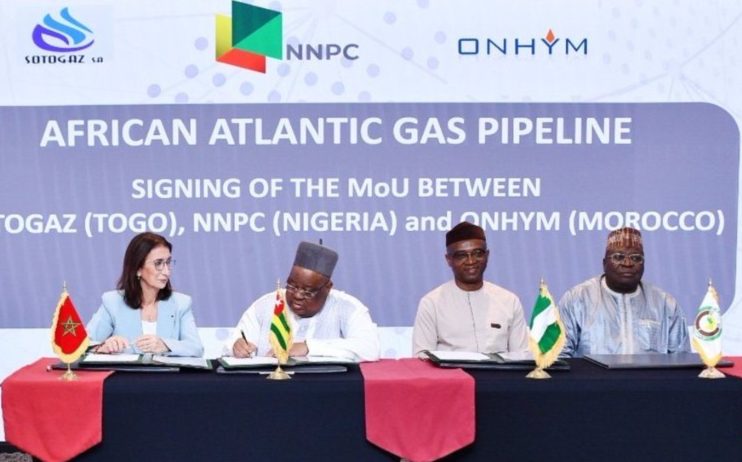
At the heart of this new phase is the establishment of a Special Purpose Vehicle (SPV), a project company tasked with overseeing financing and implementation. This entity will take the form of a joint venture between Morocco’s National Office of Hydrocarbons and Mines (ONHYM) and the Nigerian National Petroleum Company (NNPC). Its responsibilities will include financial structuring, mobilizing investments, and operational oversight of the project.
A Structured and Secure Financing Model
Contrary to earlier assumptions, the fundraising will not be directly handled by ONHYM but rather by the SPV once it is created and approved by the relevant authorities. This structure relies on a traditional approach to large-scale infrastructure projects, allowing risks to be isolated and assets secured to reassure investors.
An Energy Corridor with Continental Purpose
Beyond its industrial aspect, the gas pipeline is designed as an energy and development corridor. It is expected to boost access to energy, support the industrialization of the countries it traverses, and enhance electricity production in West Africa. Additionally, it will position Morocco as an energy gateway between Africa and Europe.
Intergovernmental Governance Framework in Progress
The project involves 13 countries and operates under a developing intergovernmental framework. The Intergovernmental Agreement (IGA), signed in December 2024 at the ECOWAS summit, outlines the creation of two key bodies: a High Authority for the gas pipeline, responsible for political coordination, and a project company for operational management. Ratification is anticipated for 2026.
A Strategic Project for Regional Energy Transition
This mega-project aims to sustainably reshape the energy landscape of West Africa while strengthening Morocco’s role as a strategic hub in gas exchanges between the African continent and Europe.