Anas Sefrioui sells his last cement operation in France and accelerates his strategic shift towards Africa with CIMAF.
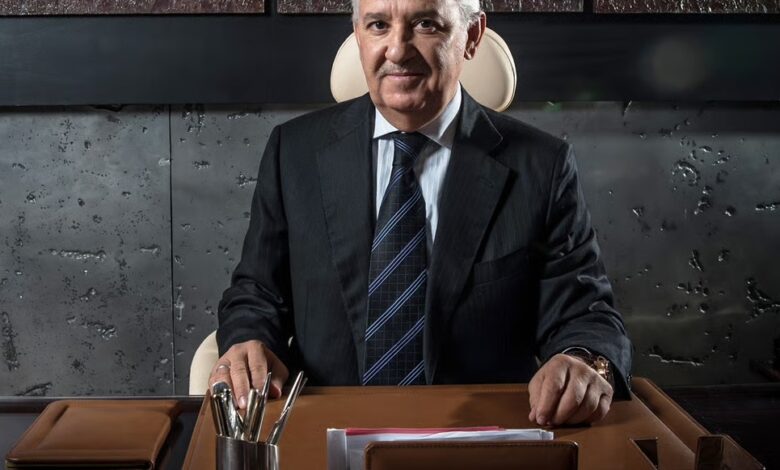
Moroccan Billionaire Anas Sefrioui Restructures Industrial Investments with Sale of French Cement Plant
Moroccan billionaire Anas Sefrioui is executing a significant repositioning of his industrial investments by selling his last cement plant located in France. This move marks the end of his direct exposure to the European cement market and confirms a strategic refocus towards the African continent, where his group, Ciments de l’Afrique (CIMAF), is experiencing rapid and continuous expansion.
According to industry sources, this plant was the final industrial asset that Sefrioui held in the European cement sector. The decision aligns with an economic arbitration strategy designed to prioritize markets with strong growth potential, particularly in Sub-Saharan Africa, where the need for infrastructure remains structurally high.
A European Industry Facing Severe Economic and Environmental Pressures
This disengagement comes amid particularly challenging conditions for the European cement industry. According to the International Energy Agency (IEA), cement production accounts for about 7% to 8% of global CO₂ emissions, making it one of the most exposed industrial sectors to climate policies.
Within the European Union, companies in the sector are facing a double shock: rising energy costs and tightening environmental regulations. Since 2022, energy prices have surged by over 50% compared to pre-crisis levels in some instances, severely affecting production costs.
Additionally, the European Commission has intensified its emission reduction requirements under the Green Deal, necessitating significant investments in decarbonizing industrial sites. In certain cases, these modernization efforts have been estimated to cost tens of millions of euros per plant.
Meanwhile, the European construction market has slowed down, with recent cycles indicating a decline of 8% to 12% in building permits across several countries. This downturn has led to a contraction in cement demand and added pressure on producers’ profit margins.
CIMAF: An African Expansion Across More Than 12 Countries
In contrast, Ciments de l’Afrique (CIMAF) is pursuing a sustained growth trajectory across the African continent since its establishment in 2011 by Anas Sefrioui. The group now operates in over 12 African countries, including Ivory Coast, Cameroon, Guinea, Gabon, Burkina Faso, Chad, Congo, and Mali. This strategy focuses on local production to be closer to consumption markets, reducing logistical costs, and tapping into infrastructure growth.
African Demand Driven by Strong Demographic Fundamentals
Today, Africa is one of the most dynamic markets globally for construction materials. According to the African Development Bank (AfDB), the continent requires between $130 billion and $170 billion in annual infrastructure investments to address its structural deficit.
Cement demand prospects are particularly high, with industry estimates suggesting consumption could reach 250 to 300 million tons per year by 2030, propelled by rapid urbanization and population growth.
Furthermore, United Nations projections indicate that Africa’s population could exceed 2.5 billion by 2050, leading to massive demand for housing, roads, public facilities, and urban infrastructure.
From Real Estate to Industry: A Mastered Vertical Integration
Anas Sefrioui’s journey began with the success of Groupe Addoha, Morocco’s leading real estate development company, particularly in social housing. This experience enabled a vertical integration strategy, linking the production of building materials with real estate projects.
This industrial model ensures better control over costs and supply chains while securing cement outlets in real estate and infrastructure markets.
Estimated Fortune of Over $1 Billion
According to estimates from Forbes magazine, Anas Sefrioui’s fortune is projected to reach around $1.3 billion by 2026. This wealth reflects the robustness of his industrial empire, despite the challenging cycles faced by the Moroccan real estate sector marked by rising interest rates and a slowdown in demand.
A Strategy Focused on African Growth
The sale of the French asset thus illustrates a clear strategic choice: reducing exposure to a mature, costly, and heavily regulated European market to concentrate on Africa, where demographic growth, urbanization, and infrastructure needs continue to bolster a strong structural demand for cement.