Chinese Solar Panels: Africa’s Import Surge, DRC’s Dependence, and Morocco’s Industrial Transition
Title: The Surge of African Imports of Chinese Solar Panels: A Reflective Shift in Energy Transition
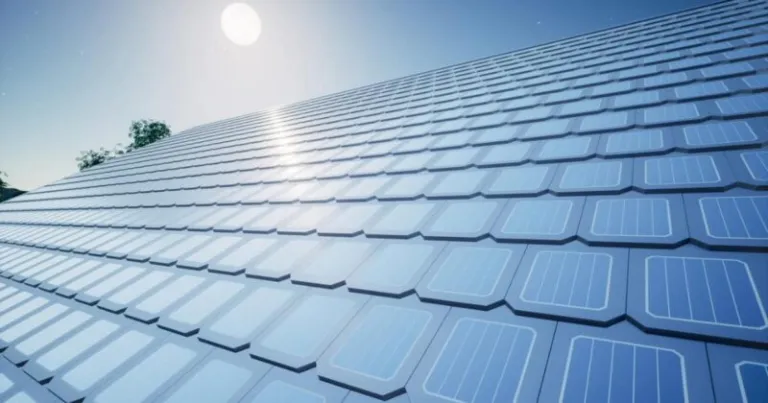
African imports of Chinese solar panels are witnessing a sharp acceleration, underscoring the continent’s growing role in the global energy transition. According to data from Chinese customs, Africa absorbed over 123,000 tons of solar panels in April 2026, marking an approximately 83% year-over-year increase. This surge illustrates the intensifying energy demand across the continent.
However, this trend conceals vastly different trajectories among African nations, ranging from structural dependence on imports to a desire for local industrial development.
The Democratic Republic of the Congo stands out as one of the most reliant markets on Chinese solar technology, with significant growth in imports driven by the need to electrify rural areas where traditional power grids are limited. In this context, decentralized solar power emerges as a central solution for achieving electricity access in regions with low energy coverage rates.
Conversely, Morocco adopts a different strategy focusing on industrial scaling and gradually reducing its reliance on imports. The Kingdom is enhancing its local production capacity for solar panels and aims to position itself as a regional industrial hub in renewable energies.
This evolution is part of a broader dynamic of energy transition within Africa, where solar panel imports have surged in recent years due to decreasing costs of Chinese technologies and increasing electricity needs.
Countries like South Africa, Egypt, Nigeria, and several others are also among the top importers, confirming the rapid structuring of the African solar market.
Nevertheless, this rapid growth highlights a significant strategic challenge related to dependence on Chinese supply chains, as many nations seek to develop local production capacities to enhance their energy sovereignty.
In this context, Morocco stands out as one of the few African countries that effectively combines imports, industrialization, and the development of structural projects in renewable energies, progressively consolidating its role in the regional energy transition.