Akhannouch Chairs the First Board of Directors Meeting of the GST for the Souss-Massa Region
Government Efforts to Reform Health Governance in Souss-Massa Region
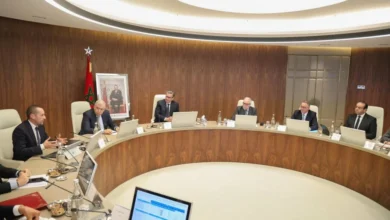
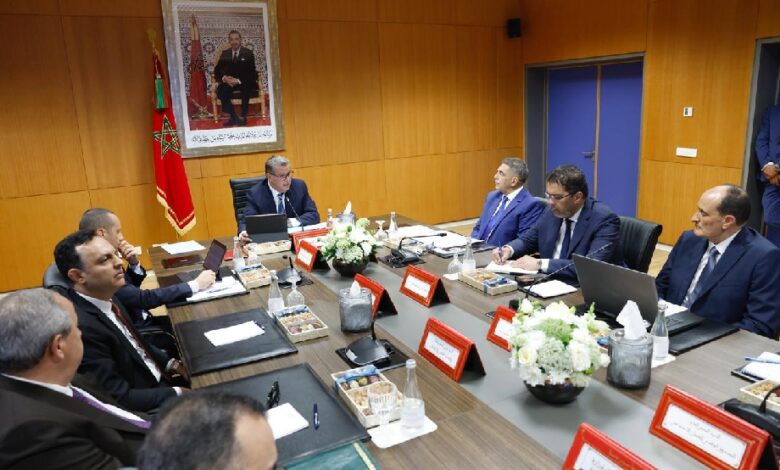
On Monday, Prime Minister Aziz Akhannouch chaired the inaugural board meeting of the Territorial Health Group (GST) for the Souss-Massa region in Agadir. This initiative is part of the government’s accelerated efforts to implement Territorial Health Groups as outlined in the high royal directives aimed at reforming Morocco’s national healthcare system comprehensively and systematically.
The establishment of this new GST follows the launches of similar groups in the Tangier-Tetouan-Al Hoceima region and the Rabat-Salé-Kénitra region. This progression highlights, according to a statement from the Prime Minister’s Department, the ongoing momentum towards developing a new model of regional health governance. This model emphasizes management independence, performance efficiency, integration across different levels of care, and consideration for territorial specificities and the real needs of the population in health decision-making.
During the meeting, the budget and action plan for the Souss-Massa Territorial Health Group for 2026 were adopted, alongside its action program for the fiscal years 2026 and 2027. Additionally, the organizational chart and the standard status for health professionals within the group were approved. It was also noted that the GST is expected to commence operations in August 2026.
At the beginning of the meeting, Prime Minister Akhannouch acknowledged the progress made in implementing the Territorial Health Groups, stating that this initiative is foundational to a new governance model in the healthcare sector. This model aims to enhance the quality of health services, improve therapeutic pathways, ensure equitable access to healthcare for all citizens, and strengthen coordination between various health establishments within each region—achieving territorial equity in alignment with the strategic goals of advanced regionalization.
Mr. Akhannouch stressed that the GST board in the Souss-Massa region is tasked with initiating a new approach to health management, transforming it into a proactive unit for planning, execution, and evaluation. He emphasized the need to view health funding as a tool for equity rather than merely a financial framework.
The meeting also underscored the strategic importance of the Souss-Massa region within the national healthcare system, given the continuous growth and demographic development it experiences.
The central role of the Mohammed VI University Hospital in Agadir within the national healthcare framework was highlighted. This reference hospital, which began operations in 2025, has a capacity of 867 beds and serves nearly three million citizens from the region and neighboring areas. Notably, it is the first healthcare facility in Africa to utilize robotic surgery technology for minimally invasive procedures with three-dimensional precision.
Furthermore, it was noted that reconstruction and upgrading work at the Hassan II Regional Hospital in Agadir, which has a capacity of 450 beds, will commence before the end of this year.
Tarik El Harti, the Director-General of the Souss-Massa GST, presented various organizational and financial aspects related to the group’s operations, emphasizing the critical role of medical governance in the success of this institutional transformation. He also stated that the regional medical program will serve as a benchmark for planning and organizing healthcare services, monitoring therapeutic pathways, and enhancing coordination among primary, hospital, and university care levels.
Mr. El Harti illuminated the vital role of family medicine in primary healthcare settings, which serves as the starting point for therapeutic pathways. It facilitates better patient referrals, reduces unjustified hospital congestion, optimizes the use of medical specialties, and enhances the sustainability of health services.
Additionally, the meeting afforded the opportunity to focus on enhancing human resources through continuous training and improving the attractiveness of regions for medical and paramedical expertise. It also highlighted the urgent need to expedite the implementation of an integrated health information system, a crucial leverage for governance, patient tracking, quality improvement, and resource management efficiency.