Lahcen Saadi: Beyond a Gift, a Matter of Symbols
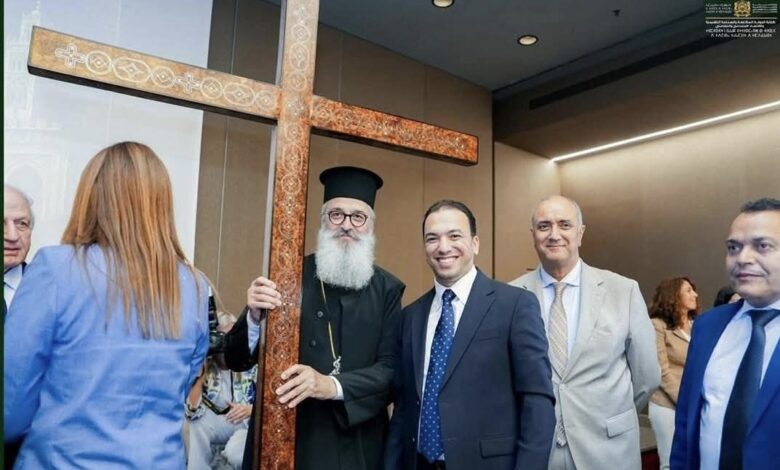
Sometimes, a ceremonial gesture goes unnoticed. Other times, it sparks a debate that far exceeds the gesture itself. This is what happened after Lahcen Saadi, the Secretary of State for Handicrafts and the Social and Solidarity Economy, presented a cross made of Moroccan juniper wood to a church in Greece.
At its core, the discussion doesn’t concern the quality of this artisanal piece or the respect owed to the Christian community. Few contest the richness of dialogue between cultures and religions, especially in a country like Morocco, whose history is characterized by coexistence and openness.
The question raised by some observers is of a different nature: what does such a gesture represent when it is not made by an individual, but by an official acting on behalf of a public institution?
This inquiry has sometimes been met with suspicion. For some, questioning the relevance of such a gift would equate to opposing openness or coexistence. However, in a democratic society, discussing the significance of symbols is by no means illegitimate. Symbols carry meaning precisely because they convey messages that transcend words.
Morocco has never needed to renounce its identity to demonstrate respect for other religions. Its history is one of a country that has embraced various cultural and spiritual components while preserving its own references. It is this confidence in its identity that has often been a source of strength.
Consequently, some wonder why the choice fell on a cross, a central symbol of the Christian faith, instead of one of the many expressions of Moroccan heritage. The kingdom possesses an exceptional legacy: zellige tiles, calligraphy, art objects, carpets, historical manuscripts, and artisanal creations recognized worldwide. Each of these gifts could have showcased national craftsmanship while transmitting a message of friendship.
Supporters of this initiative argue that the gesture simply reflects a desire for consideration towards the recipients. Critics, however, raise concerns about representation and symbolic coherence. The debate remains open between these two positions.
For the real question is not whether to respect the religious symbols of others—that is self-evident in a society rooted in tolerance. Rather, it is about determining how far a state representative can or should appropriate these symbols in the context of official duties.
This matter ultimately reminds us that symbols hold a special place in public life. An object offered in the name of a state is never seen as just a simple gift. It conveys intention, an image, and sometimes a vision of the relationship with the other.
Beyond the controversy, one thought remains: does mutual respect manifest more through the exchange of each other’s symbols or by highlighting one’s own cultural heritage while acknowledging that of others? The answer likely belongs to public debate, but the question itself deserves to be posed calmly.