Casablanca: 341 Million Dirhams to Accelerate Infrastructures in Casa Sud
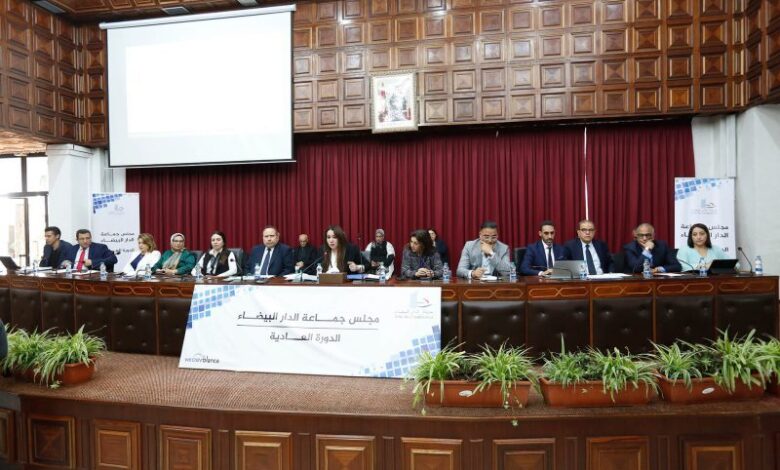
On Monday, August 17, 2026, the Casablanca City Council approved several agreements and decisions concerning key projects aimed at transforming the metropolitan area. Among the highlighted initiatives are the enhancement of mobility infrastructure in Casa Sud, the modernization of waste management systems, and the funding for several parking facilities.
These decisions come as Casablanca continues its efforts to revamp its infrastructure to support the urban and economic growth of the metropolis.
341 Million Dirhams for Casa Sud
The priority program dedicated to mobility infrastructure in Casa Sud will entail a total investment of approximately 341 million dirhams. The implementation of this program is expected to span around 24 months.
The project includes the construction of a new 500-meter road connecting Gare Avenue to the A3 overpass, as well as the creation of a two-lane underpass beneath the A3. The widening of the Oasis Road over a length of 2.5 kilometers is also among the key operations planned.
Additionally, the program features a ramp to the A3, an underpass under the Oasis Road, a new 200-meter road towards the urban highway, a 450-meter OCP bridge, and the widening of the OCP road by 600 meters.
Multiple Partners Engaged
Funding for this extensive program will be provided by several partners. The Casablanca municipality will contribute 81 million dirhams, while the Anfa Urbanization and Development Agency will allocate 110 million dirhams. The OCP Group will provide 100 million dirhams, and the National Railways Office (ONCF) will contribute 50 million dirhams. Casa Transport will act as the delegated project manager.
Casablanca Accelerates Waste Valorization
The city council also approved an agreement focused on the development of a landfill and waste processing center for household and similar waste in Casablanca.
The project involves the construction and operation of new landfill cells, leachate treatment, and biogas recovery. A waste-to-energy recovery unit is also planned to generate electricity from household waste.
Additionally, a solar component will complement the setup. The electricity produced by the energy recovery unit is intended to be sold to ONEE (National Electricity Office).
The program also includes the rehabilitation of the controlled landfill in Casablanca and the post-closure management of rehabilitated sites in both Casablanca and Médiouna.
280 Million Dirhams for Parking Facilities
The council also addressed the issue of parking during the extraordinary session. An amendment to the fourth addendum of the existing agreement regarding the construction of parking facilities in Casablanca was approved.
This is not a launch of a new program but rather an adjustment to the timeline for mobilizing the municipality’s financial contributions.
The budget allocated for this venture reaches 280 million dirhams, with 275 million to be covered by the municipality and 5 million provided by the General Directorate of Local Authorities. Of the municipal contribution, 200 million dirhams have already been disbursed. The remaining 75 million will be mobilized in two phases, with 25 million in the second half of 2026 and 50 million in 2027.
Land Use and Urban Planning Decisions
The session also focused on several land-use issues. Two plots located in Mahaj Hassan II, within the Sidi Belyout district, are set to transition from public communal property to private communal property.
Additionally, the council approved several alignment decisions aimed at establishing the boundaries of public roads in various districts, including Sidi Bernoussi.
However, two proposals regarding the amicable acquisition of a 936-square-meter parcel in Maârif, designated for the development of a public garden, were postponed.
A New Phase for Casablanca’s Infrastructure
Through these decisions, Casablanca is moving forward with multiple ongoing projects: enhancing mobility in the southern part of the metropolis, modernizing waste management, developing parking facilities, and adapting urban infrastructure.
The Casa Sud program, backed by 341 million dirhams, stands out as one of the major projects approved in this session, aimed at improving road connections in a strategic area of the metropolis.