Boycott of Centrale Danone in Morocco: The Ghost of 2018 Resurfaces Amid Tensions over Purchasing Power
Centrale Danone Faces New Controversy Amid Rising Milk Prices
Eight years after a boycott campaign that significantly impacted Morocco’s economic landscape, Centrale Danone finds itself at the center of a renewed controversy. Recent price hikes for milk and its derivatives have reignited calls for a boycott on social media, set against the backdrop of rising pressure on household purchasing power.
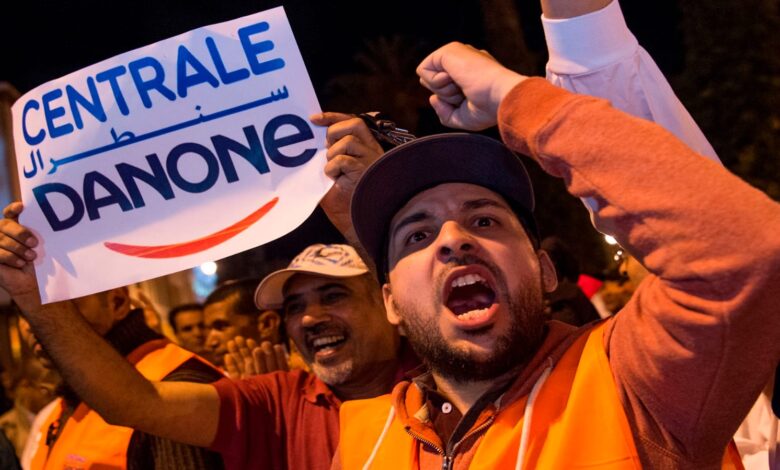
In 2018, an unprecedented citizen mobilization led to a substantial decline in Centrale Danone’s sales. The scale of the movement forced the company’s management to engage in dialogue with Moroccan consumers and reconsider its pricing strategy.
Today, the scenario appears to be repeating itself. On digital platforms, calls for mobilization are multiplying, fueled by a growing frustration over the continuous price increases affecting essential goods. For many consumers, milk—a daily staple—now symbolizes the escalating difficulties linked to decreasing purchasing power.
This situation comes at a time when the cost of living is a central concern in political discourse. In Parliament, opposition parties regularly question the government about the effectiveness of measures aimed at protecting consumers, combating speculation, and mitigating the effects of inflation on households.
With legislative elections scheduled for September 23, this new controversy could also have political repercussions. Several observers believe that the social discontent stemming from rising prices could sway the electoral climate and increase voter apathy, in a context already laden with concerns about the cost of living and the challenges faced by Moroccan families.
It remains to be seen whether this digital mobilization will have an impact similar to that of 2018. The outcome will depend on both the level of consumer support and the ability of various stakeholders to address the concerns raised regarding purchasing power.