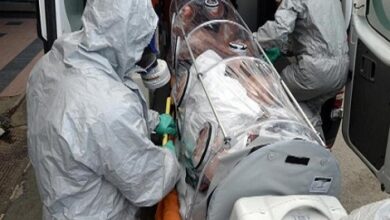
Ebola: The United Arab Emirates Strengthens Health Measures at Borders

As part of their health prevention strategy, the authorities of the United Arab Emirates have decided to implement additional precautionary measures to limit the risks associated with the spread of the Ebola virus.
This decision was announced jointly by the National Emergency, Crisis and Disaster Management Authority and the Federal Authority for Identity, Citizenship, Customs, and Port Security.
Suspension of Visa Issuance for Three African Countries
Starting Saturday, June 6, 2026, at 1:00 PM, UAE authorities will suspend the issuance of all new visas for nationals from three identified at-risk countries:
- The Democratic Republic of the Congo;
- Uganda;
- South Sudan.
This measure particularly affects visitor visas and may be extended depending on the evolution of the health situation.
However, freight flights between the United Arab Emirates and these three countries will continue as usual.
Entry Restrictions for Affected Travelers
The authorities have also announced a temporary ban on entry to the UAE for travelers coming directly or indirectly from the affected countries.
This restriction applies to passengers transiting through one or more countries before arriving in the United Arab Emirates.
An exception will be made for individuals who have spent more than 21 days outside these countries prior to their arrival in the UAE.
International transit operations via UAE airports will remain unaffected.
Ongoing Monitoring of the Health Situation
The UAE authorities have stated that they will maintain continuous monitoring of the Ebola epidemic in coordination with international organizations and local health partners.
They have also indicated that additional measures could be adopted if the virus were to spread to other countries, in accordance with risk assessments and existing health protocols.
Preserving National Health Security
Through these decisions, the United Arab Emirates aim to bolster their level of preparedness and protect public health while maintaining essential economic activities, particularly the transportation of goods.
This preventive approach is part of a broader strategy to anticipate international health risks and ensure the safety of travelers and residents.