SITeau 2026: Towards a More Integrated Global Water Governance, Warns a Moroccan Expert
The Critical Importance of Water Governance in a Changing World
The question of water governance is increasingly recognized as a fundamental global issue, especially in a context marked by intensifying water tensions and the effects of climate change.
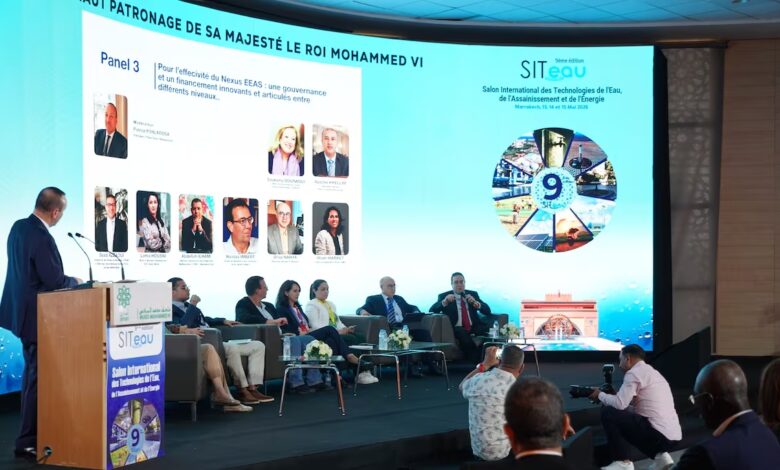
During the 9th edition of the International Water Technology Fair (SITeau) in Marrakech, discussions centered on the urgent need to rethink existing models of water resource management at the international level.
Water: An Under-Structured Global Challenge
According to various speakers, global water governance remains fragmented, characterized by a multitude of institutional actors but lacking a unified framework comparable to those in other environmental sectors.
This fragmentation limits the effectiveness of global policies, even as water has become a strategic resource interconnected with food, energy, and climate issues.
Towards an Integrated and Cross-Sectoral Approach
The debates highlighted the concept of a “nexus” linking water, energy, agriculture, and health, considered an essential lever for sustainable resource management.
This approach aims to transcend traditional sectoral logics to adopt a more comprehensive vision that incorporates the interactions between different water uses and their economic and social impacts.
Morocco: A Country Committed to Sustainable Water Management
Morocco has been presented as an engaged actor in establishing structured water policies, notably through investments in dams, integrated resource management, and the development of innovative solutions.
This dynamic is part of a national strategy aimed at enhancing resilience to water stress and improving sustainable access to drinking water.
A Global Issue Tied to Security and Sustainability
Beyond the Moroccan context, experts emphasize the necessity of strengthening international cooperation around water management, which has become a crucial determinant of economic and social stability.
Water issues are now viewed as a matter of global governance, requiring enhanced coordination among states, institutions, and private actors to ensure a more equitable and sustainable use of this essential resource.