Careers in Morocco: Sand, Stone, and the Gray Economy—The Flaws of a Strategic Sector
Natural Resource Exploitation in Morocco: A Stark Contrast
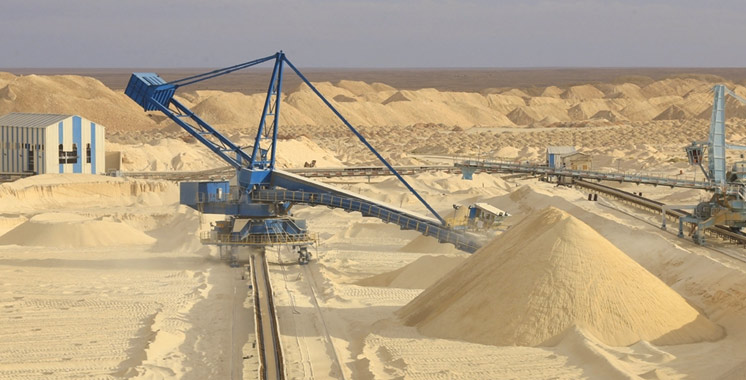
In Morocco, the exploitation of natural resources reveals a striking contrast. While mining falls under a well-structured state strategy, quarries—including those for sand and stone—function within a more ambiguous ecosystem, characterized by uneven regulation. Nonetheless, the quarry sector plays a crucial role in the national economy, supplying the construction industry, urbanization, and major infrastructure projects. However, behind this strategic significance lies a more complex reality, encompassing gray economies, territorial tensions, and often underappreciated environmental costs.
Sand in Morocco has become a resource under immense pressure, driven by a real estate boom and the proliferation of projects. This sustained demand has given rise to a concerning phenomenon: illegal sand extraction along beaches, dunes, and riverbeds. In regions such as Larache and Safi, the consequences are already visible, including coastal erosion, ecosystem degradation, and rising local tensions. The scale of the issue has led several observers to speak of a genuine sand mafia in Morocco, an organized structure that is difficult to contain.
Beyond the coastline, land quarries in Morocco also crystallize tensions. In several rural areas, particularly in Benslimane and around Marrakech, the opening or expansion of quarries has sparked increasing protests. Communities denounce the appropriation of communal lands, the nuisances associated with dust and road traffic, and the added pressure on water resources. A pervasive sense of injustice is taking hold, fueled by the belief that the economic benefits of these quarries bypass the affected territories.
The issue of quarry exploitation permits in Morocco represents another point of contention. The system is regularly criticized for its lack of transparency, concentration of licenses, and accusations of favoritism. In some cases, conflicts of interest have been highlighted, reinforcing the idea that a quarry can serve as both a local influence tool and an economic asset.
From a regulatory perspective, quarry legislation in Morocco has seen advancements with the 2015 law aimed at better regulating the sector through mandatory environmental impact assessments and strengthened control mechanisms. However, in practice, the implementation of these provisions remains uneven. A lack of resources, regional disparities, and a certain tolerance towards informal operations contribute to the growing gap between law and practice.
The environmental impact of quarries in Morocco, however, is far from negligible. The extraction of sand and stone leads to progressive deforestation, soil erosion, air pollution, and disruption of groundwater layers. Along the coastline, sand extraction exacerbates coastal erosion and increases vulnerability to climate change. Despite this, these costs are seldom incorporated into the sector’s economic models.
The very structure of Morocco’s quarry sector complicates its regulation even further. Fragmented, dispersed, and dominated by a multitude of actors of varying sizes, it eludes control more easily than the mining sector. This configuration promotes a lack of traceability and the expansion of the informal economy in Morocco.
Ultimately, quarries in Morocco act as a mirror reflecting the limits of territorial governance. They highlight the state’s difficulty in imposing uniform regulation across the territory. While mines embody controlled sovereignty, quarries become spaces of compromise, or even dysfunction.
This debate extends far beyond economic or environmental stakes. It raises the question of the capacity to build a genuine economic rule of law, grounded in clear rules applied universally. For while sand constructs cities, its chaotic exploitation undermines trust in institutions and exacerbates imbalances.
Beyond resource scarcity, it is the management of these resources that poses the primary challenge today. An uneven and sometimes opaque management places the quarry sector in Morocco at the heart of issues related to transparency, sustainability, and governance.