Regional Crisis: Morocco Raises Its Voice and Defends Arab Stability
Morocco Strongly Condemns Iranian Missile Attacks on Arab States
The tone is unmistakable. The Kingdom of Morocco has condemned "in the strongest terms" the Iranian missile attacks that violated the integrity and security of several brother Arab states: the United Arab Emirates, Bahrain, Qatar, Kuwait, and Jordan.
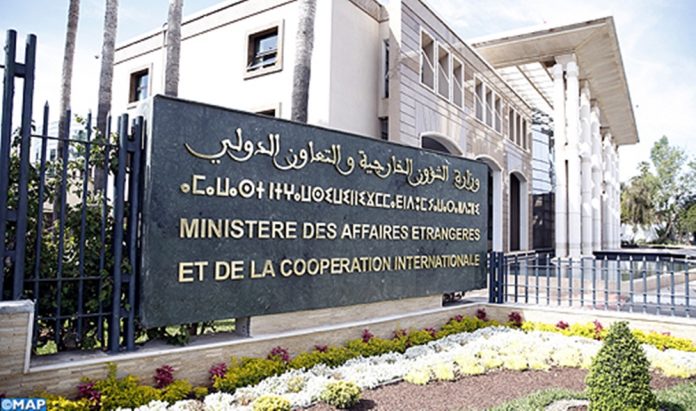
In a statement, the Ministry of Foreign Affairs, African Cooperation, and Moroccans Abroad characterized this attack as "aggression" and a "flagrant violation of national sovereignty" of the affected states. The text also mentioned an "unacceptable breach of their security" as well as a "direct threat to the stability of the region." The choice of words here is telling. In diplomacy, the leveling of language is never insignificant. Referring to "aggression" and "flagrant violation" establishes a clear legal and political framework; the sovereignty of Arab states is a red line.
In fact, Morocco does not settle for a mere denunciation of principle. The statement emphasizes that the Kingdom views these strikes as a direct challenge to the regional order based on respect for borders and territorial integrity. In a Middle East where strategic rivalries are regularly manifested through displays of force, this stance underscores Morocco’s commitment to defending a regional architecture founded on international law and non-interference. The message is twofold: firstly, to reject any normalization of sovereignty violations; and secondly, to remind that regional stability relies on the responsibility of states and adherence to common rules.
Furthermore, the Kingdom expresses its "full solidarity" with the targeted Arab states in any legitimate measures they may take to respond to the attack and ensure the security of their citizens and residents.
This solidarity aligns with a diplomatic continuity. Morocco maintains close strategic relations with Gulf countries and Jordan, based on political, economic, and security cooperation. Beyond bilateral partnerships, this is a principled stance: one state’s security is linked to the equilibrium of all.
In a global context marked by a proliferation of crises, any additional destabilization in the Gulf region poses significant economic and security risks that extend far beyond the borders of the directly affected states.
The Moroccan reaction fits into a constant line of defending state sovereignty, commitment to regional stability, and support for peaceful dispute resolution mechanisms. By firmly condemning these strikes, Rabat asserts a clear vision of regional balances: collective security can only be maintained through respect for law and strategic restraint. Any military escalation carries the risk of an uncontrollable spiral.