Heading Towards a Sustainable Future: The Souss-Massa Regional Multi-Service Company Accelerates Its Ecological Transition by Investing in Climate and Water Security.
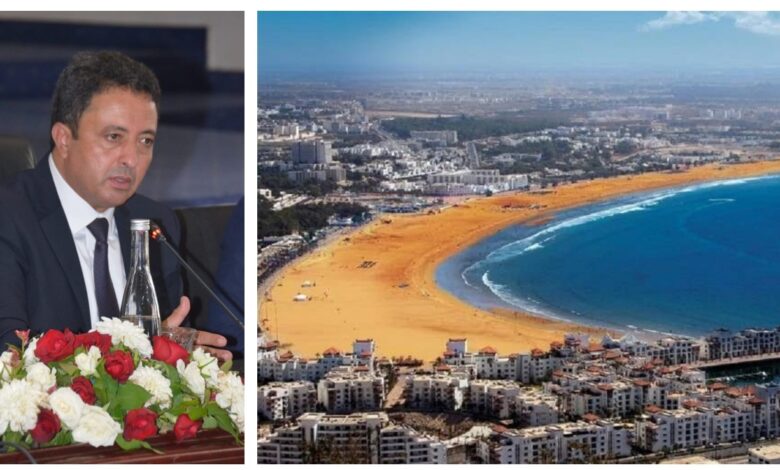
Advancing Sustainable Development: The Souss-Massa Regional Multi-Service Company’s Climate Initiatives
Confronted with the challenges of climate change and water stress, the Souss-Massa Regional Multi-Service Company (SRM-SM) is strengthening its sustainable development strategy through two major projects: the expansion of the El Mzar wastewater treatment plant and the establishment of its first carbon footprint assessment. These initiatives reflect a commitment to fully integrate environmental governance into the management of public services, including drinking water, electricity, and wastewater treatment.
The expansion of the El Mzar facility, with an investment of nearly 950 million dirhams, will increase the plant’s wastewater treatment capacity from 78,000 to 144,000 cubic meters per day. Additionally, it aims to boost the production of treated wastewater for reuse to over 27 million cubic meters per year. This project is designed to enhance water security for Greater Agadir, safeguard conventional resources, and promote more sustainable water management in a context marked by resource scarcity.
According to Mohammed Tafraouti, a Moroccan ecologist and president of the Environmental Perspectives Center for Information and Sustainable Development, environmental governance has become one of the fundamental pillars of public service management, particularly in a world experiencing profound climate, energy, and natural resource transformations. In this context, the carbon assessment conducted by the Souss-Massa Regional Multi-Service Company carries strategic importance. It embodies an institutional vision that prioritizes scientific knowledge, rigorous measurement, transparency, and continuous improvement as the foundations for decision-making, demonstrating the company’s commitment to a development path that fully integrates environmental considerations into sound governance and responsible management.
This initiative goes beyond merely creating an inventory of greenhouse gas emissions; it serves as a strategic tool that allows for a more profound understanding of the environmental footprint of various activities. It provides a scientific basis for guiding investments, optimizing energy and resource consumption, enhancing operational efficiency, and facilitating the transition to a low-carbon economy, in line with sustainable development goals.
This achievement occurs within an international framework characterized by accelerating decarbonization efforts. Since the Paris Agreement and the adoption of the Sustainable Development Goals, the transition to a low-carbon economy has emerged as a key lever in the fight against climate change. Concurrently, public institutions and private companies are increasingly integrating environmental performance indicators into their evaluation and transparency measures, which are now considered major quality criteria in governance and management effectiveness.
Nationally, this approach aligns with Morocco’s strategic vision on energy transition, as outlined in the national sustainable development strategy, as well as the country’s climate commitments. These commitments place the reduction of greenhouse gas emissions and improved energy efficiency at the heart of development policies. Furthermore, it showcases the ability of regional public institutions to translate these guidelines into concrete actions and measurable projects.
In the Souss-Massa region, challenges related to water stress, increased water and energy demand, and the effects of climate change on ecosystems and economic activities are growing. In this context, the carbon assessment takes on strategic significance, providing a scientific basis for developing more effective natural resource management policies and enhancing the capacity of infrastructure to adapt to climate changes.
This project also reflects an advanced institutional awareness that environmental protection is inseparable from the quality of public services. Drinking water, electricity, and wastewater management are essential services for citizens and represent sectors whose activities directly influence energy consumption and greenhouse gas emissions. Improving their environmental performance thus represents an investment in resource preservation and quality of life enhancement.
The Souss-Massa Regional Multi-Service Company is reinforcing this direction by employing a rigorous scientific methodology that encompasses all sources of direct and indirect emissions, in accordance with ISO 14064 standards. The results undergo independent verification to ensure reliability, traceability, and transparency. This choice symbolizes the establishment of a genuine institutional culture where measurement, evaluation, and continuous improvement are the primary levers for driving environmental performance.
The true value of the carbon assessment also lies in its ability to guide future action. It has led to the formulation of a decarbonization roadmap based on energy consumption control, the development of renewable energy sources, infrastructure performance improvement, the acceleration of digital transformation, enhancement of operational efficiency, and the mobilization of human resources and partners around a culture of environmental responsibility.
This initiative is even more significant as it illustrates the evolving concept of public service in Morocco. Environmental governance is now an integral part of administrative and financial governance, while climate performance gradually emerges as a major indicator of management quality and the capacity of institutions to meet future challenges. Efficient management of natural resources, emission reductions, and investment in sustainable solutions are now foundational to building more resilient institutions that are better equipped to navigate global transformations.
Thus, this project opens new avenues for the Souss-Massa Regional Multi-Service Company to solidify its position among benchmark public entities in environmental management. It demonstrates that the transition to a low-carbon economy begins with institutional initiatives grounded in science, upheld by principles of good governance, and capable of transforming international and national commitments into concrete actions that produce tangible benefits for the environment, society, and the economy.
Finally, the carbon assessment contributes to establishing an institutional culture where planning, investment, and decision-making are based on environmental performance. It thus strengthens citizen trust, supports sustainable development dynamics, and reflects a collective responsibility towards the climate and future generations.
Exclusive Interview: "The Carbon Assessment Reflects an Institutional Vision that Makes Environmental Performance a Component of Public Service Quality"
In light of this institutional transformation and to fulfill its commitment to integrating environmental considerations into public service governance, the Souss-Massa Regional Multi-Service Company has completed its first carbon assessment, covering all its activities in electricity, drinking water, and wastewater management. This project embodies a strategic vision built on scientific rigor, transparency, energy efficiency, and alignment with national and international climate action guidelines. To shed light on the implications, objectives, and prospects of this initiative, we spoke with Mr. Mohamed AMERZAG, General Director of the Souss-Massa Regional Multi-Service Company.
Question: What does the 2025 carbon assessment represent for the Souss-Massa Regional Multi-Service Company?
Mr. Amerzag:
The carbon assessment is a strategic step in reinforcing our company’s governance. It reflects our commitment to integrating environmental and climate considerations at all levels of management and decision-making. Measuring greenhouse gas emissions provides a solid scientific basis for better understanding the impact of our activities and guiding investments toward projects that promote greater energy efficiency and sustainability.
This initiative also reflects a growing awareness that the quality of public service depends on its ability to preserve natural resources, reduce emissions, and provide services that meet sustainable development requirements.
Question: What led the company to prioritize the environmental aspect in its strategy?
Mr. Amerzag:
The accelerated pace of climate change compels all institutions, especially public services, to adapt their operations to new challenges. The water, electricity, and sanitation sectors are closely linked to energy consumption and natural resource management. Therefore, integrating the environmental dimension is a strategic choice that enhances management efficiency while ensuring the sustainability of services.
We believe that investing in the environment is also an investment in quality of life, resource security, and the company’s capacity to meet future challenges.
Question: How does this project align with national and international climate orientations?
Mr. Amerzag:
We have ensured that this project is grounded in the best international references, especially through the quantification of emissions in accordance with ISO 14064 standards and the independent verification of results following a rigorous methodology that guarantees their reliability and transparency.
The project is fully compliant with Morocco’s climate action commitments, energy transition goals, and national sustainable development strategy. It translates these orientations into concrete actions at the regional level, thereby enhancing the company’s contribution to national greenhouse gas reduction objectives and promoting a low-carbon economy.
Question: Is the carbon assessment merely a technical exercise, or does it represent a genuine vision for managing the company?
Mr. Amerzag:
The carbon assessment is primarily a strategic planning and decision-making tool, far more than a mere technical exercise. It enables us to precisely identify emission sources, prioritize actions, assess project impacts, and objectively measure the outcomes of energy efficiency programs.
It also provides valuable indicators to improve internal policies, optimize resource management, and strengthen the environmental performance culture within the company, all while adhering to good governance principles.
Question: What key measures are included in your decarbonization roadmap?
Mr. Amerzag:
Our roadmap focuses on several complementary axes: improving energy efficiency, developing renewable energy utilization, modernizing infrastructure, enhancing operational efficiency, and integrating innovative digital solutions for environmental performance monitoring.
We also emphasize the importance of training human resources, fostering a culture of environmental responsibility, and involving all our partners, as the success of the ecological transition depends on collective mobilization that transcends the limits of the company.
Question: The Souss-Massa region faces growing environmental challenges, particularly regarding water resources. How does this situation influence the company’s directions?
Mr. Amerzag:
The specificities of the Souss-Massa region lend this project a distinct dimension, considering the challenges of water stress, increased demand for essential services, and the impacts of climate change.
In this regard, we are developing solutions aimed at improving resource use efficiency, reducing energy consumption, and supporting ecosystem protection efforts while ensuring the sustainable preservation of water resources, in line with the regional development strategy.
Question: What role do you attribute to transparency in the success of this approach?
Mr. Amerzag:
Transparency is one of the foundations of environmental governance. That’s why we have ensured that the carbon assessment is based on traceable and verifiable data, subjected to a rigorous control process in compliance with international standards.
This approach fosters trust among all stakeholders, provides objective performance evaluation indicators, and encourages continuous improvement, in line with international best practices.
Question: In parallel with the carbon assessment, the company is implementing a strategic project for expanding the wastewater treatment plant. To what extent does this project illustrate your commitment to ecological transition and the circular economy? What will its impact be on water security and carbon footprint reduction?
Mr. Amerzag:
The expansion of the wastewater treatment plant is one of the strategic projects illustrating the company’s commitment to ecological transition and the circular economy. The current facility serves a population equivalent to 2.123 million inhabitants and treats an average of 78,000 cubic meters of wastewater per day. The new expansion will increase capacity to accommodate an additional 1.1 million inhabitants, with an extra treatment capacity of 66,000 cubic meters per day.
Thanks to this investment, the total treatment capacity will reach 144,000 cubic meters per day, allowing us to support urban and demographic growth, enhance sanitation services, and strengthen the protection of water resources and ecosystems.
One of the main benefits of the project is the increase in the production of treated wastewater for reuse, which will rise from 30,000 to 66,000 cubic meters per day. This change will reduce pressure on conventional water resources and provide an alternative resource for irrigating green spaces and other uses compatible with circular economy principles.
The project will also contribute to reducing the carbon footprint of the sanitation sector by limiting the reliance on conventional water resources, reducing the energy required for water abstraction and transport, improving treatment performance, and preparing for the future integration of energy efficiency solutions and renewable energy sources. This will enhance the company’s contribution to Morocco’s national objectives for greenhouse gas reduction and climate change adaptation.
The total investment amounts to approximately 905 million dirhams. The expansion is expected to be operational by 2026, making this project a strategic investment that balances water security, environmental protection, improved service quality, and the promotion of more sustainable and resilient development in the Souss-Massa region.
Question: What message would you like to convey to conclude this interview?
Mr. Amerzag:
The world is currently undergoing a profound transformation in its conception of development. Environmental protection, rational resource management, and climate action have become essential components of shaping the future.
The Souss-Massa Regional Multi-Service Company is fully committed to this dynamic, with a spirit of responsibility and innovation, convinced that public service plays a crucial role in achieving sustainable development.
Our ambition is for this project to mark a new step towards building a more efficient, resilient, and sustainable company that contributes to Morocco’s climate objectives and positions the Souss-Massa region as a benchmark in environmental governance, serving citizens and future generations.