The National Agency for Water and Forests Holds the 3rd Strategic Meeting of the GREEN JOBS II Project in Rabat, Reaffirming Its Commitment to Sustainable, Inclusive Development and the Creation of Green Jobs in Rural and Mountain Areas.
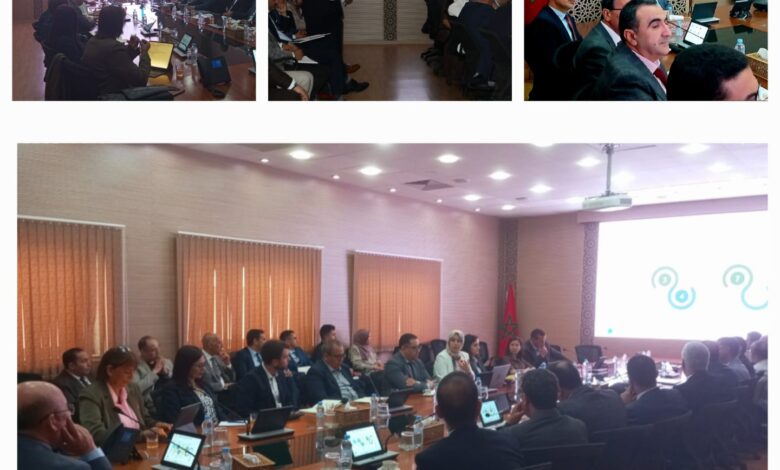
National Agency for Water and Forests Holds Strategic Meeting for GREEN JOBS II Project
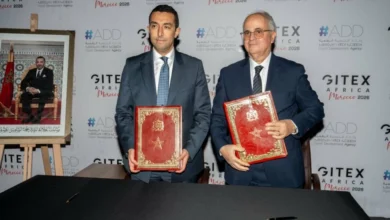
Mr. Abderrahim Houmy, Director General of the National Agency for Water and Forests (ANEF), chaired the third Steering Committee meeting for the GREEN JOBS II project, titled "Promotion of Green Jobs through Sustainable Value Chains in Rural and Mountain Areas," in Rabat. The meeting was attended by Ms. Oumnia Aboukorah-Voigt, Director of the Energy, Environment, and Governance Division at GIZ Morocco, along with project implementation teams.
This strategic gathering marked a significant milestone in evaluating progress, analyzing results, and preparing for the post-project phase aimed at consolidating achievements and considering conditions for sustainability and scalability.
Funded by the German Federal Ministry for Economic Cooperation and Development (BMZ) with €5.5 million, and implemented by the German Agency for International Cooperation (GIZ), the GREEN JOBS II project supports the "Forests of Morocco 2020-2030" strategy. It aids rural and forestry collective economic structures by strengthening their technical, managerial, and commercial capabilities while promoting sustainable resource management across four high-potential regions: Tangier-Tétouan-Al Hoceima, Fès-Meknès, Béni Mellal-Khénifra, and Rabat-Salé-Kénitra.
In his opening remarks, Mr. Houmy commended the significant advancements made, underscoring that this project serves as a concrete illustration of how strategic partnerships can sustainably transform rural and mountainous territories. He reaffirmed ANEF’s commitment to consolidating and enhancing the project’s achievements for the benefit of local communities, adopting an integrated approach that places green economy, social inclusion, and sustainability at the heart of territorial development.
The Director General also highlighted the crucial role of this initiative in promoting rural forest entrepreneurship, enhancing economic inclusion for youth, and empowering women, contributing to the emergence of more resilient and competitive local economic models.
Meanwhile, Ms. Oumnia Aboukorah-Voigt pointed out that this third meeting comes at a pivotal moment, transitioning from an experimental phase to a mature stage where the project’s impacts are now visible and measurable on the ground. She stressed the need to capitalize on the gains and collectively reflect on levers that would allow for their broader deployment, integrating this dynamic into policies for territorial economic development sustainably.
The GREEN JOBS II project employs an integrated approach targeting collective economy structures in forest environments, focusing on four strategic value chains: non-timber forest products, forestry work and the valorization of wood resources, ecotourism, and freshwater aquaculture. Through incubation mechanisms, action training, support for administrative and financial structuring, business plan development, equipment, and market access, the project aims to foster the emergence of autonomous economic structures capable of generating sustainable local development dynamics.
With just a year left until its completion, the project has already yielded impressive results: 70 collective economy structures have been supported, nearly half of which reported an average revenue increase of about 20%. Approximately 1,170 direct jobs were created, and 1,180 beneficiaries enjoyed a 20% increase in their incomes. Furthermore, over 1,700 individuals benefited from specialized training, providing a lasting boost to local skills.
Among these structures, nine "champion" cooperatives stand out due to their advanced maturity level, capacity to access new markets, and growing role in supporting other local initiatives, thereby contributing to the emergence of a structured and supportive forest cooperative ecosystem.
These results affirm the relevance of the jointly pursued approach by ANEF and its partners, establishing the GREEN JOBS II project as a strategic lever for sustainable socio-economic transformation in rural and mountainous areas, promoting responsible natural resource management and building an inclusive green economy.