SRM-SM Bridges Public Services in Rural Areas
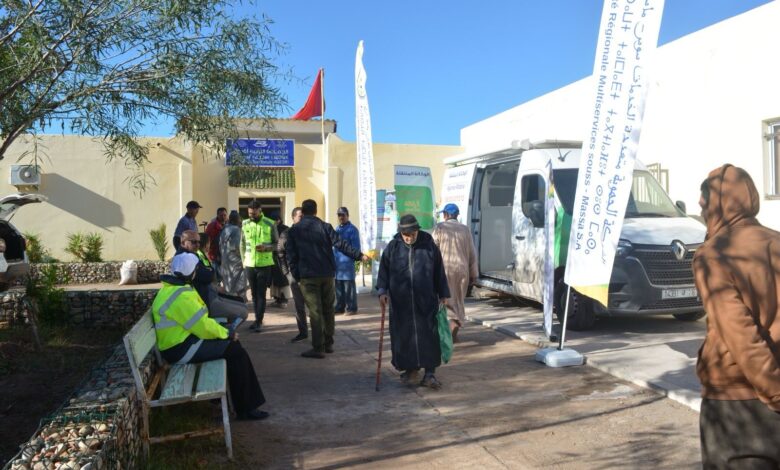
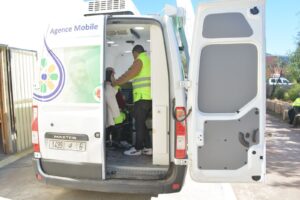
The community initiatives led by the Souss-Massa Regional Multi-Service Company (SRM-SM) are part of a continuous effort aimed at bringing drinking water, electricity, and wastewater services closer to citizens. With a qualitative approach rooted in principles of territorial equity and the right to access modern public services, SRM-SM has launched the mobile agency project, strategically designed to enhance coverage in rural and isolated areas.
Following the positive results recorded during its initial experience in the municipality of Tamri, the mobile agency continued its deployment, making a stop on January 26, 2026, in the municipality of Aqesri, part of the Agadir Ida-Outanane prefecture. This initiative allowed residents to directly benefit from the company’s services without having to travel to distant fixed agencies.
 Equipped with state-of-the-art digital and logistical solutions, the mobile agency provided users with optimal conditions for signing up for subscription contracts, combining proximity, simplicity, and efficiency. Furthermore, this experience confirms the evolution of SRM-SM’s management approach, focusing on listening to citizens’ expectations and facilitating their access to essential services.
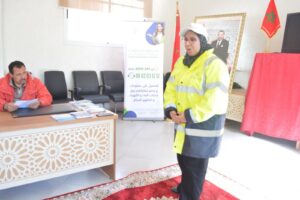
In this continuation, the General Directorate of SRM-SM announced the continuation of the mobile agency program, aiming to cover various douars in the municipality of Aqesri in the coming days, as well as other municipalities in the Agadir prefecture, before a gradual expansion to all provinces in the Souss-Massa region.
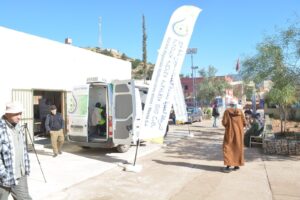
This initiative clearly reflects the desire to reduce territorial disparities and strengthen social justice by favoring a close service offer for rural populations who have long faced the constraints of distance and the complexity of administrative procedures. It also represents a concrete manifestation of national orientations regarding rural development and guaranteeing the right to drinking water, electricity, and wastewater services as essential foundations for sustainable development. As SRM-SM expands this model to new territories, a sense of trust is developing among the concerned populations, demonstrating that this approach transcends mere service improvement towards a broader vision where effective development begins when public service meets the citizen.