The African Race for Green Ammonia Accelerates with Coega, Morocco Positioned for Strategic Advantage
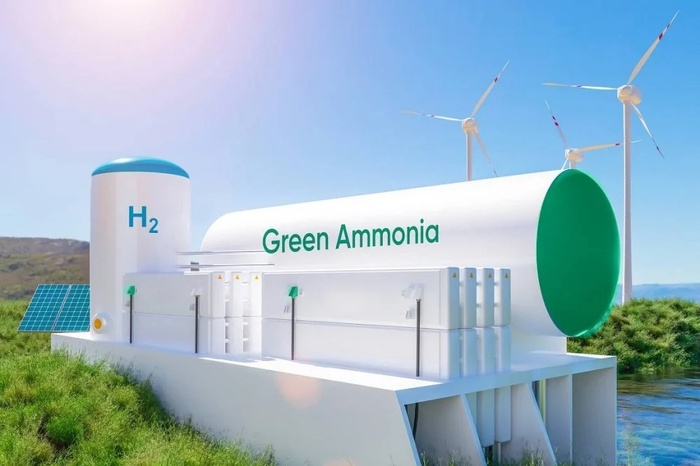
South Africa’s Coega Project Marks a New Era in the Green Ammonia Race
The announcement of South Africa’s Coega project confirms, according to Le Nouvelliste, that the African race for green ammonia has entered a concrete industrial phase. Developed by Hive Energy and BuiltAfrica, the project has secured a technological contract worth approximately one billion dollars with the Danish company Topsoe for a plant valued at 5.8 billion dollars, aimed at producing one million tons of green ammonia annually by 2030.
In this dynamic context, Morocco emerges as a central player in the continental competition, but with a different approach. As reported by Le Nouvelliste, the Kingdom is not merely in direct competition with South Africa; instead, it is structuring a broader and more integrated strategy around green hydrogen and its derivatives.
In 2024, Morocco launched the "Moroccan Offer for Green Hydrogen," led by Masen, which seeks to develop projects covering the entire value chain, from renewable electricity production to transformation into green ammonia. This strategy relies on significant structural advantages, including substantial solar and wind potential, proximity to Europe, expanding port infrastructures, and an already established industrial ecosystem around OCP.
According to Le Nouvelliste, several international consortiums are already assessing large-scale projects in Morocco, particularly in the Guelmim-Oued Noun region, where a capacity of approximately 200,000 tons of green ammonia per year is envisaged. Other partnerships, such as between OCP and Engie, could mobilize up to 17 billion euros in investments for renewable energy, desalination, and the production of green molecules.
The media highlights that the competition will not solely revolve around the size of announced projects but also on their bankability, the availability of green electricity, securing water resources, port infrastructures, and the ability to finalize long-term purchase agreements.
South Africa gains an advantage with the Coega project, especially due to its already structured timeline, with FEED engineering studies scheduled for 2026 and a final investment decision expected in 2027. However, Morocco, according to Le Nouvelliste, adopts a more holistic approach based on multiple industrial hubs and integrated energy corridors, supported by new port infrastructures like Nador West Med and Dakhla Atlantique.
In conclusion, Le Nouvelliste asserts that the battle for green ammonia in Africa is just beginning: it will hinge less on the volume of announcements and more on the actual capacity of countries to convert their renewable resources into funded, operational, and export-competitive industrial projects.