Ormuz Strait: Towards a Diversion of Trade Routes and a Reconfiguration of Global Flows
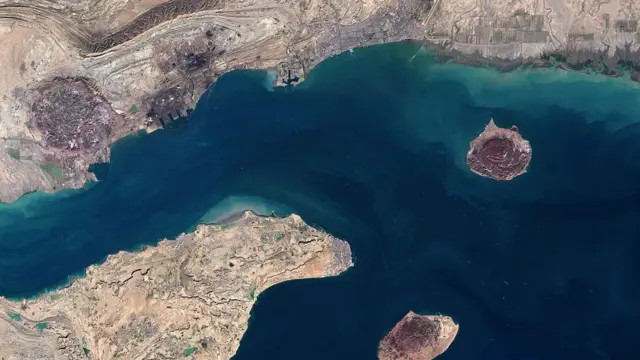
Tensions surrounding the Strait of Hormuz, one of the world’s most strategic maritime passages, are gradually reshaping international trade routes. In response to the risks of disruptions in this vital corridor for global commerce, logistical flows are beginning to shift towards alternative routes, particularly overland and maritime paths that circumvent the region.
This phenomenon is occurring within a context of heightened geopolitical volatility in the Middle East, prompting shipping stakeholders to adapt their strategies to secure supply chains.
A Strategic Strait at the Heart of Global Trade
The Strait of Hormuz is an indispensable passage linking the Persian Gulf to the Indian Ocean. It accounts for a significant portion of global hydrocarbon trade, with approximately one-fifth of international oil flows transiting through this area.
This structural dependence makes it a major point of vulnerability for global economies, particularly for large energy importers in Asia and Europe.
Developing Alternative Routes
In light of the risks of blockage or disruption, several logistical and energy stakeholders are exploring circumvention solutions.
These alternatives rely on mixed corridors combining maritime and overland transport across the Arabian Peninsula, enabling the avoidance of direct passage through the strait. Some logistical chains, in particular, are utilizing ports located in the Red Sea and the Gulf of Oman, involving long-distance truck transfers across the desert.
Though these routes are more complex and costly, they help reduce reliance on a single critical passage point.
A Reconfiguration of Global Supply Chains
This evolution contributes to a broader transformation of international trade flows. Shipping companies are adapting their routes based on geopolitical risks, leading to longer transport times and increased logistics costs.
In some cases, shipowners are opting for longer but safer routes that bypass high-tension areas in the Middle East.
An Impact on Global Energy Trade
The Strait of Hormuz plays a central role in the export of oil and natural gas from Gulf countries. Any disruption in this passage has an immediate effect on global energy markets due to its significance in supplying major consumers like China, India, and Europe.
The search for alternative routes, therefore, reflects a desire for energy security on an international scale.
Towards a Redefinition of Strategic Corridors
In the long term, the proliferation of alternative routes could redraw the map of global trade corridors. States and logistical operators are investing in port and overland infrastructures capable of reducing dependence on sensitive straits.
This dynamic confirms that global trade is entering a new phase, characterized by the securing of routes and the diversification of supply chains.