Ports in Morocco: Nador West Med and Dakhla Atlantic, Two Strategic Megaprojects for a New Maritime Power
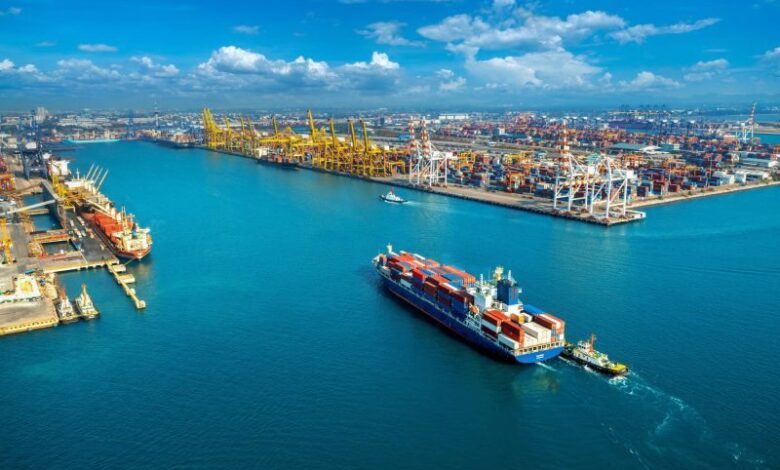
Morocco continues to strengthen its port strategy through two major ongoing projects: the Nador West Med port on the Mediterranean coast and the Dakhla Atlantic port on the Atlantic coast. These infrastructures aim to enhance the Kingdom’s positioning as a significant logistics and maritime hub between Europe, Africa, and the South Atlantic.
Following the success of the Tangier Med port, an international benchmark for maritime connectivity, these new projects complement a strategically conceived port network.
Nador West Med: A Future Mediterranean Hub of Great Scale
Located on the Mediterranean coast, the Nador West Med port is currently in an advanced construction phase, with an completion rate exceeding 95%. Delivery is expected by the end of 2026.
The project represents an investment estimated at approximately 14 billion dirhams and plans for an initial capacity of 5 million TEUs (Twenty-foot Equivalent Units), which could eventually reach between 15 and 17 million TEUs.
The port will be operated by major international players in maritime transport, including MSC and CMA CGM, reinforcing its integration into the global logistics chains.
In parallel, an 800-hectare industrial zone is being developed, dedicated to strategic sectors such as renewable energies, manufacturing, and equipment manufacturing.
The site also aims to become a major energy hub, with the integration of projects related to liquefied natural gas and green hydrogen. Ultimately, the project could generate between 80,000 and 100,000 direct and indirect jobs.
Dakhla Atlantic: A Future Atlantic Hub towards West Africa
On the Atlantic coast, the Dakhla Atlantic port is under construction, with delivery expected by the end of 2028. The project is approximately 57% complete, with a total investment estimated at 12.5 billion dirhams.
The construction is being carried out by a coalition of leading Moroccan companies, while the infrastructure progresses steadily, notably the docks and maritime works. A 1,300-meter maritime bridge has already been completed, marking an important milestone in the project.
The future port will have an annual capacity of around 35 million tons, covering various activities: containers, bulk, hydrocarbons, fishing, and energy.
An industrial-logistics zone of 1,650 hectares will accompany the port infrastructure, focusing on agro-industry, fishery product processing, and renewable energies.
A Dual Maritime Facade Supporting National Strategy
With Nador West Med to the north and Dakhla Atlantic to the south, Morocco is establishing a complementary port architecture covering both the Mediterranean and the Atlantic.
This strategy aims to enhance the Kingdom’s logistic competitiveness, attract industrial investments, and position the country as a major corridor between Europe, Africa, and the Atlantic Ocean.
Towards an Integrated and Competitive Port Network
Beyond the infrastructures, these projects reflect a comprehensive vision for economic development based on connectivity, industrialization, and regional integration.
Thus, Morocco continues to construct a modern and integrated port network capable of supporting economic growth and adapting to changes in international trade.