Rabat Smart Book 2026: Awarded Innovative Projects to Democratize Access to Reading and E-Books
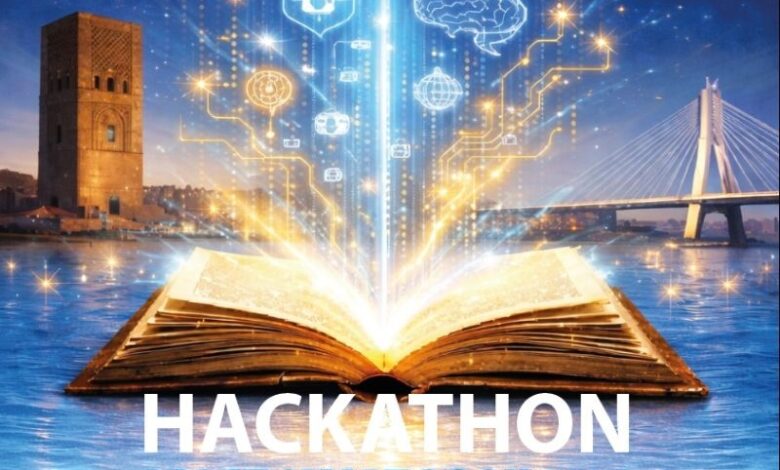
The closing ceremony of the “Rabat Smart Book 2026” Hackathon took place on Saturday in Rabat, rewarding several innovative projects aimed at facilitating access to reading and promoting the inclusion of people with specific needs through digital technologies.
Organized by the Ribat Al Fath Association for Sustainable Development in partnership with the Ministry of Youth, Culture, and Communication, this event is part of the “Rabat, World Capital of Books” initiative.
A Hackathon for Reading and Innovation
This edition of the Hackathon featured the presentation of three major awards: the Technology Innovation Award, the Cultural Impact Award, and the Grand Prize of the Hackathon. These awards were given to teams that developed digital solutions to modernize access to books and knowledge.
The winning projects contribute to a cultural innovation dynamic, combining digital technologies, artificial intelligence, and social inclusion to make reading more accessible to all.
Books at the Heart of Digital Transformation
The Minister of Youth, Culture, and Communication, Mohamed Mehdi Bensaid, emphasized that this initiative aims to place books at the center of the technological revolution.
According to him, the digital transition represents a major opportunity to broaden the circle of readers, reduce barriers to accessing knowledge, and encourage the meeting of cultural heritage, modernity, and artificial intelligence.
This vision aligns with a broader strategy for human development, reinforcing Rabat as an international platform for cultural innovation.
Technological Solutions for Inclusion
The projects developed during the Hackathon propose concrete solutions to improve accessibility to reading, particularly for individuals with disabilities or those living in rural areas.
Among the innovations presented were systems for converting printed books into audio format for the visually impaired, as well as eye-tracking assisted reading technologies for individuals with limited mobility.
These tools illustrate the potential of digital technologies to democratize access to knowledge and reduce cultural inequalities.
Supporting Young Talents
According to the organizers, this Hackathon edition brought together 22 teams from various cities across the kingdom. The hybrid format adopted over several months allowed participants to develop more refined and well-structured projects.
The winning projects will now receive support to facilitate their realization and deployment on the ground, in a spirit of promoting youth innovation.
A Movement Driven by Civil Society
The Ribat Al Fath Association for Sustainable Development, engaged for several decades in promoting innovation and modernization, reaffirmed its role in supporting young people and disseminating educational technologies.
Officials highlighted the importance of adapting reading practices to digital evolutions in order to enhance the love of books and foster an inclusive knowledge society.
A Cultural Vision for the Future
Through the “Rabat Smart Book 2026” Hackathon, institutional and associative actors aim to make books a lever for digital and social transformation.
This initiative illustrates the willingness to combine culture, technology, and inclusion to build new models of access to knowledge that are in tune with contemporary developments.