Renewable Energy: Morocco Accelerates Solar and Wind Power in 2025
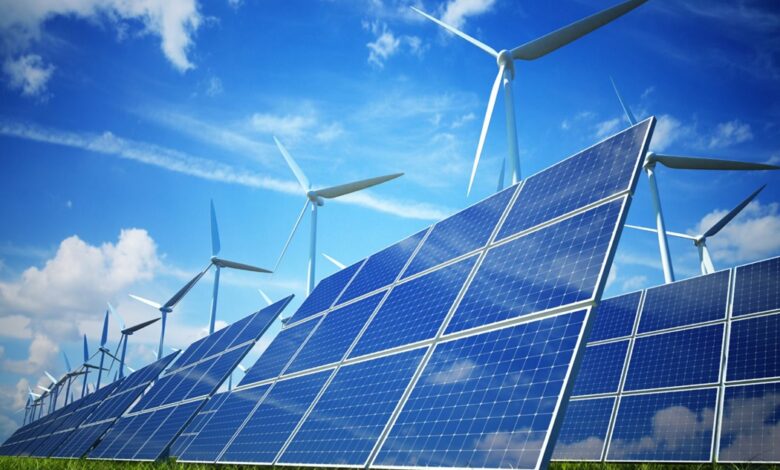
Morocco Continues to Strengthen Its Renewable Energy Capacity, with Progress in Solar and Wind Energy by 2025
Morocco is advancing its efforts to develop renewable energies and diversify its energy mix. According to the latest edition of the Statistical Review of World Energy by the Energy Institute, the installed solar and wind capacities in the Kingdom continued to progress in 2025.
This development confirms the momentum that Morocco has been building for several years to enhance the role of renewable energy sources within its energy system, even as fossil fuels remain largely dominant.
Solar Capacity Surpasses 1,000 MW Installed
Installed solar capacity in Morocco reached 1,086 MW in 2025, up from 951 MW in 2024. This increase represents a growth of over 14% in just one year.
Wind energy is also continuing its development. Installed capacity grew from 2,395 MW in 2024 to 2,452 MW in 2025, affirming the increasing role of this sector in national electricity production.
These new capacities are progressively contributing to increasing the share of renewable energies in the Kingdom’s energy supply.
Hydropower Production Also Rises
The Energy Institute’s report also notes an increase in hydropower production, which rose from 0.3 TWh in 2024 to 0.4 TWh in 2025.
Overall, the contribution of renewable energy to Moroccan energy supply is estimated at 0.04 exajoules in 2025, marking an improvement compared to the previous year.
Although this evolution remains limited in absolute terms, it nevertheless reflects ongoing investments in renewable infrastructure.
Fossil Fuels Remain Dominant in Morocco
Despite the growth in solar and wind energy, Morocco remains heavily dependent on fossil fuels.
According to data from the Energy Institute, the total energy supply of the Kingdom reached 0.99 exajoules in 2025, up from 0.95 exajoules in 2024—a rise of 5.2%.
Oil remains by far the primary energy source, accounting for 0.64 exajoules, followed by coal at 0.28 exajoules, and natural gas at 0.03 exajoules.
Together, these fuels represent the majority of national energy supply, while renewable energies still play a minor role.
Electricity Demand Continues to Grow
The report also highlights an increase in electricity production in Morocco, which reached 45.9 TWh in 2025, compared to 43.7 TWh the previous year.
Natural gas consumption also increased, reaching approximately 1 billion cubic meters, up from 0.95 billion cubic meters in 2024.
This development is part of a broader context of rising energy needs in the Kingdom, particularly due to the gradual electrification of various uses and the development of new industrial and economic activities.
An Energy Transition Still Facing Many Challenges
Globally, the Energy Institute also notes an increase in energy consumption in 2025. Electricity demand continues to rise, driven by the growth of data centers, artificial intelligence, air conditioning, and electrification of usage.
Renewable energies continue to grow, but fossil fuels still hold a predominant place within the global energy system.
For Morocco, the growth in solar and wind capacities thus represents an important step in the energy transition. However, data from the report indicate that the Kingdom will need to continue investing in renewables to progressively reduce its dependence on fossil fuels and meet the rising energy demand.