
China Sends an Astronaut on a Year-Long Mission in Space
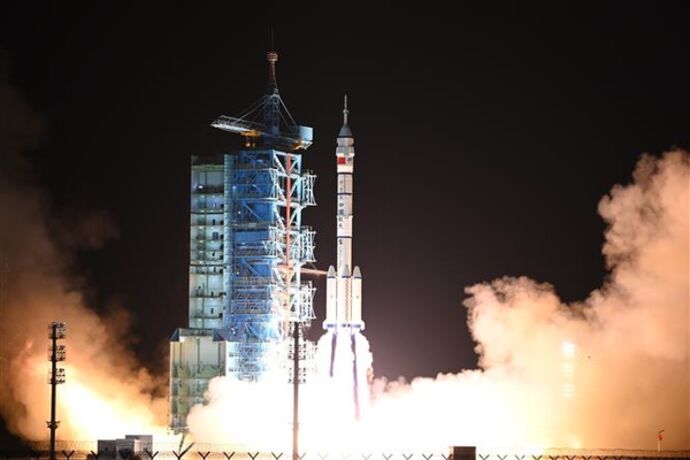
China is set to launch a new crewed mission to its Tiangong space station this Sunday, with a particularly ambitious goal: allowing one of the astronauts to remain in orbit for nearly a year.
This mission, part of the Chinese space program, marks a significant milestone in the development of long-duration crewed flights and confirms Beijing’s growing ambitions in space exploration.
A Mission to the Tiangong Space Station
The Shenzhou-23 mission will transport a crew of three astronauts to the Chinese Tiangong space station. Once in orbit, the crew members will join the space laboratory where they will conduct various scientific experiments.
One of the astronauts will remain aboard for an exceptional duration of approximately one year, a first for this type of Chinese mission in a unique configuration.
Scientific Goals and Long-Duration Testing
The primary aim of this mission is to study the effects of prolonged stays in microgravity on the human body. Researchers will focus on physical endurance, physiological adaptations, and the psychological capabilities of astronauts in a long-term space environment.
This data is considered essential for preparing China’s future ambitions, including its lunar exploration projects.
Tiangong at the Heart of China’s Space Strategy
The Tiangong space station is currently the cornerstone of China’s crewed space program. It regularly hosts crews of three astronauts for missions lasting several months, and this new operation marks a turning point with an extended stay duration.
This orbital laboratory also enables the testing of advanced technologies, particularly in life support, in-orbit maintenance, and long-duration mission management.
Increasingly Defined Lunar Ambitions
This mission is part of a broader strategy to prepare for a future human return to the Moon. China aims to achieve a crewed lunar landing in the coming years and subsequently develop a sustainable presence on Earth’s natural satellite.
The tests conducted aboard Tiangong thus represent a crucial step in validating the technologies needed for these future explorations.
Accelerating Global Space Competition
With this mission, China reaffirms its position among the major global space powers, alongside the United States and other key players in the sector.
Long-duration missions are becoming a central issue in the race for space, paving the way for even more ambitious projects toward the Moon and beyond.