
Automobiles: Stellantis, Renault, and Volkswagen call for a strengthened “Made in Europe” in response to Chinese competition.
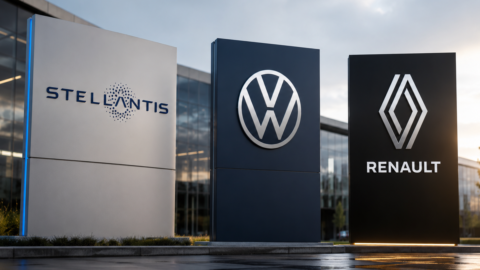
European Automotive Giants Call for Reinforced Protection Against Cheap Chinese Electric Vehicles
European automotive giants Stellantis, Renault, and Volkswagen are urging the European Union to strengthen mechanisms that protect its automotive industry against the rising competition from low-cost Chinese electric vehicles. The three manufacturers have submitted a joint proposal to European institutions advocating for stricter criteria for the "Made in Europe" label.
Representing over 60% of the European Union’s automotive production, the trio believes that the sector’s competitiveness relies on a regulatory framework that favors manufacturers who produce, innovate, and invest within European territory.
According to information reported by the Financial Times, these industrial leaders are calling for new regulations that would give preference to locally manufactured vehicles when it comes to accessing public aid, subsidies, and public contracts.
Currently, European proposals specify that electric vehicles intended for corporate fleets and certain small models must be assembled within the EU and contain at least 70% local components, excluding batteries, to qualify for support mechanisms.
However, Stellantis, Renault, and Volkswagen advocate for a different approach. They propose that at least 70% of vehicles produced in Europe incorporate a minimum of 70% components sourced from EU countries, as well as from Iceland, Liechtenstein, and Norway. The remaining 30% could be imported from third-party countries.
The manufacturers also wish to expand the definition of "Made in Europe" to include not only the final assembly of vehicles but also research, development, engineering, and design activities conducted on the continent.
Beyond origin rules, the industrial leaders are requesting additional support measures to compensate for competitive disadvantages related to energy and labor costs. They emphasize that European producers are operating in a more expensive environment than some competitors based in countries such as Turkey or Morocco.
This stance comes amid significant pressure on the European automotive industry, which is facing an accelerated transition to electric vehicles, intensified Asian competition, and the urgent need to safeguard thousands of strategic industrial jobs on the continent.