
Africa: Transforming Wealth into Industrial Power, the Challenge of the Next Decade
Sure! Here’s a fluent, high-quality English translation of the provided French article:
—
Africa’s Unique Advantages
Africa possesses exceptional advantages. The continent boasts nearly 60% of the world’s available arable land, holds immense reserves of strategic natural resources, and benefits from a youthful population that represents a tremendous lever for development. Yet, despite these strengths, many African countries continue to confront structural challenges, particularly in terms of industrialization, access to infrastructure, energy, education, and employment.
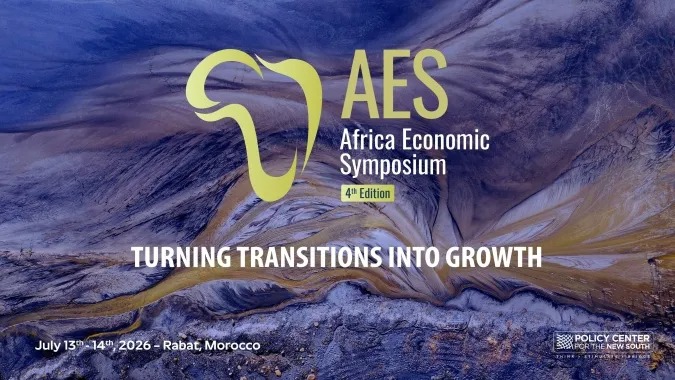
During the fourth edition of the African Economic Symposium (AES), organized by the Policy Center for the New South, Morocco’s Minister of Industry and Commerce, Ryad Mezzour, emphasized the need to move beyond the traditional narrative focused on Africa’s potential. He believes the real challenge now is to convert these wealth resources into productive capacities capable of generating sustainable and inclusive growth.
From Natural Resources to Value Creation
For Ryad Mezzour, a country’s wealth is not solely measured by its natural resources but primarily by its ability to transform them locally. Industrialization is thus an essential engine for creating jobs, enhancing public revenue, and improving services for citizens.
The governmental official asserts that the main challenge for African economies lies in the industrial transformation of raw materials to produce greater added value on the continent, rather than merely continuing to export primary resources.
Economic Openness: A Costly but Necessary Bet
Morocco’s experience illustrates the sacrifices required for an ambitious industrial strategy. The gradual opening of the national economy to international markets has weakened several historical sectors, which now face particularly competitive foreign competition.
The tire manufacturing industry serves as a striking example. Two factories established in Casablanca shut down following market liberalization, resulting in significant social consequences. However, this transitional period ultimately facilitated the emergence of a much more efficient industry.
Today, new production units in Morocco boast a capacity close to 15 million tires annually, far surpassing the output of the former factories. This evolution marks a profound change in the national industrial model, now more integrated into global value chains.
Infrastructure: The Pillar of Competitiveness
Industrial development would not have been possible without massive investments in logistical infrastructure.
Before the large port projects, waiting times at the Port of Casablanca severely penalized Moroccan exports. The commissioning of Tanger Med, the expansion of the highway network, and the creation of numerous industrial zones have significantly enhanced the Kingdom’s competitiveness.
These infrastructures have reduced logistics costs, facilitated trade exchanges, and increased Morocco’s attractiveness to international investors, even if their profitability wasn’t immediately evident at the time of their launch.
The Automotive Industry: A Symbol of Morocco’s Industrial Success
The outcomes of this strategy are particularly visible today in the automotive sector.
Having become the country’s leading export sector, it generates around 260,000 direct jobs and supports several hundred thousand indirect jobs within a vast ecosystem of suppliers, equipment manufacturers, and logistics providers.
This success relies on a long-term industrial policy combined with modern infrastructure that enables efficient integration into European and international supply chains.
The Need for Long-Term Investments
The minister reminded that major infrastructure projects often require several years to fully realize their economic effects.
Unlike the private sector, which typically prioritizes quickly profitable investments, the state must anticipate future needs by funding structural projects whose benefits may not become apparent until one or two decades later.
In his view, this long-term vision is essential for broadening the productive base, bolstering tax revenue, and sustainably financing social policies.
Locally Valorizing Natural Resources
Development does not solely depend on having mineral or energy resources, but largely on their local transformation.
Morocco exemplifies this strategy through its phosphate sector. The Kingdom is no longer limited to mining; it is also developing transformation activities, research, and the production of high-value fertilizers.
In several African countries, however, a significant portion of raw materials continues to be exported without industrial transformation, limiting local economic benefits.
Artificial Intelligence: A New Opportunity for Africa
Beyond traditional industry, Ryad Mezzour believes artificial intelligence presents a tremendous opportunity to accelerate development across the continent.
Thanks to new digital tools, small enterprises can now access analytical, research, programming, and engineering capabilities that were once reserved for large multinationals.
This technological democratization could foster innovation in key sectors such as health, agriculture, industry, scientific research, and public services.
Building African Digital Sovereignty
Nonetheless, the minister believes this technological revolution must be accompanied by investments in skills, digital infrastructure, and local development capabilities.
Africa must also produce its own artificial intelligence solutions tailored to its languages, economic realities, and specific needs in order to reduce its dependence on major international platforms.
For Ryad Mezzour, after physical infrastructures and industrial ecosystems, mastering artificial intelligence technologies could become the next strategic lever for Africa’s economic transformation.
—
Feel free to ask if you need any further assistance!