Akhannouch Accelerates Health Reform in Morocco Following Royal High Directions
A Structural Reform of the Moroccan Healthcare System
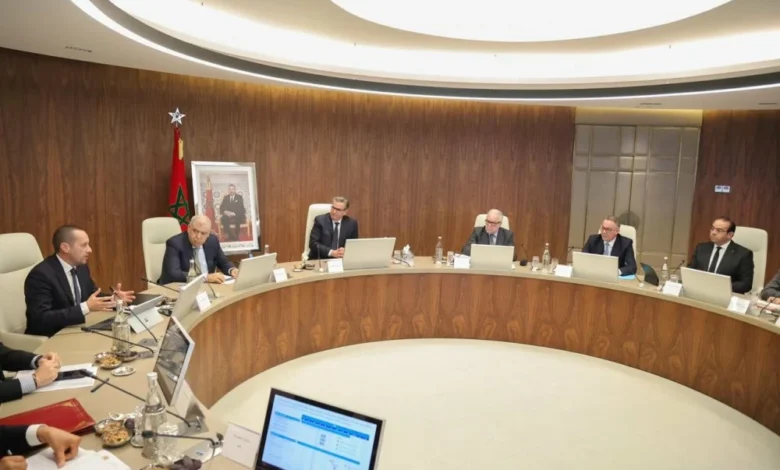
The Head of Government, Aziz Akhannouch, recently chaired a strategic meeting in Rabat focusing on the follow-up of the national healthcare reform. This gathering is part of the Royal High Guidelines aimed at building a modern, equitable, and sustainable healthcare system capable of addressing the increasing needs of citizens. Central to this reform are territorial healthcare clusters, designed as a foundational pillar to enhance coordination among various levels of care and to actualize the regionalization of the sector.
Health Centers: An Extensive Modernization Program
Morocco is pursuing an ambitious program to rehabilitate primary healthcare centers. To date, 1,400 facilities have already been modernized, while a new phase involving an additional 1,600 centers is currently underway. By 2026, 500 health centers are planned, with special attention given to rural and isolated areas to ensure equitable access to local healthcare services.
Hospital Infrastructure: A Projected Addition of 3,000 Beds
In the hospital sector, the government is focusing on scaling up healthcare offerings. By 2026, no less than 15 hospital projects are expected to be completed, providing approximately 3,000 new beds nationwide. In parallel, the construction program for six University Hospital Centers (CHUs) is ongoing, with a total investment exceeding 20.6 billion dirhams. Notably, the Mohammed VI University Hospital in Agadir is highlighted as a model for a next-generation hospital, equipped with advanced medical technology.
Digitalization of Healthcare: Towards an Integrated System
Digital transformation is a key focus of this reform. The health card project is nearly complete, with a data completeness rate of 95%. A national integrated digital platform, compiling data from both public and private sectors, is also ready for imminent deployment. Additionally, shared medical records and electronic health records will gradually come into operation starting in 2026, aimed at improving care continuity and simplifying administrative processes.
Strengthened Governance and Services for Citizens
Digitalization is accompanied by enhanced services for users. The "Chikaya Santé" platform is evolving into a national integrated complaint management system supported by a dedicated listening center. In a similar vein, the Moroccan Agency for Medicines and Health Products is accelerating its digital transformation through the establishment of a unified digital interface.
Towards Generalizing Emergency Medical Assistance (SAMU) in Morocco
Lastly, the development of the Emergency Medical Assistance (SAMU) system continues, with a gradual extension of the regional model tested in Rabat-Salé-Kénitra to the entire national territory.