Cereals: Morocco Becomes France’s Top Non-EU Client
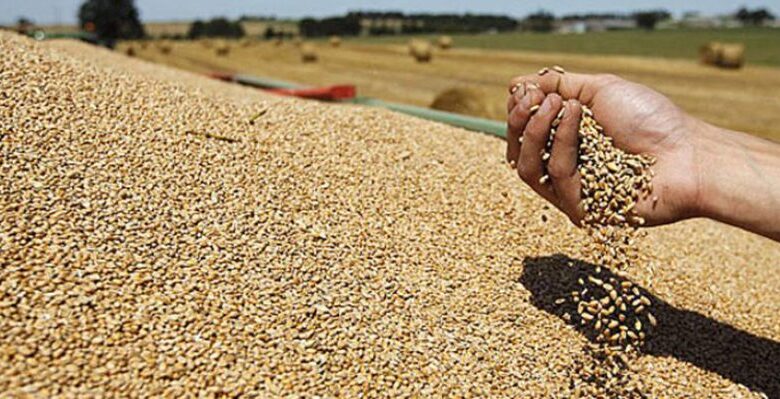
Morocco Ranks First Among Non-EU French Grain Buyers
Morocco has emerged as the top non-EU client for French cereals, with an impressive 82% increase in its purchases during the 2025-2026 commercial campaign, which spans from July 2025 to June 2026. According to data released on October 23 by FranceAgriMer, French cereal exports to the kingdom reached €754 million, approximately 8.15 billion dirhams.
This boost of €339 million compared to the previous campaign, where Moroccan purchases totaled €415 million, enabled Morocco to surpass the United Kingdom. In contrast, British imports of French cereals declined by 6%, amounting to €395 million.
The gap between these two markets now stands at €359 million, highlighting Morocco’s growing importance as a destination for French cereal exports.
Morocco Climbs to Fourth Place Globally
The increase in Moroccan purchases has also led to Morocco moving up in the global rankings of France’s customers. The kingdom jumped from sixth to fourth place, trailing behind Belgium, the Netherlands, and Spain.
French cereal exports to Belgium hit €1.289 billion, despite a 9% decrease, while exports to the Netherlands rose by 2% to €983 million. Spain saw purchases reach €876 million, reflecting a 9% increase, whereas Germany recorded €516 million, up by 8%.
Other markets also showed positive trends. French cereal sales to Italy grew by 15%, reaching €467 million, and exports to China surged by 63%, amounting to €265 million.
Outside of the European Union, several destinations recorded particularly significant percentage increases, notably Saudi Arabia, with €195 million, up by 279%, and Egypt, with €160 million, an increase of 271%. However, these amounts remain significantly lower than those recorded in Morocco.
Morocco Accounts for 21.7% of Non-EU Sales
Morocco’s weight in France’s external cereal market strengthened during the last campaign. The kingdom represented 21.7% of France’s cereal exports to non-EU countries, up from 16.8% a year earlier.
Its share of total French cereal exports abroad rose to 9.3%, according to calculations based on FranceAgriMer statistics.
Globally, France exported €8.101 billion worth of cereals during the 2025-2026 campaign, marking a 15% year-on-year increase. Sales to EU countries totaled €4.634 billion, compared to €3.467 billion for markets outside the Union.
The French cereal trade surplus reached €6.417 billion, an increase of 22%. Wheat exports totaled €3.082 billion, up by 41%, while corn exports amounted to €1.182 billion, rising by 2%. These figures encompass all foreign destinations, not solely those to Morocco.
German Competition Remains a Concern
FranceAgriMer has identified Germany as France’s main European competitor in the Moroccan grain market. However, the published data do not specify the value of German shipments to the kingdom or the breakdown of Moroccan imports by country of origin.
Thus, the increase in French exports alone is not sufficient to gauge France’s market share evolution in Morocco. Such an analysis would require data on total Moroccan imports, the volumes purchased from each supplier, and the various categories of cereals involved.
Additionally, the 82% surge in sales corresponds to their financial value. Without detailed data on quantities actually delivered and average prices, it is impossible to accurately deduce changes in the volumes imported by Morocco.
French Agricultural Sales to Morocco Reach €1.288 Billion
Beyond cereals, French exports of agricultural and food products, wood and its derivatives, as well as biodiesel to Morocco reached €1.288 billion, roughly 13.93 billion dirhams, between July 2025 and June 2026.
This amount, compared to €974 million during the previous campaign, represents an increase of €314 million, or 32.2%. Cereals now account for 58.5% of this total, reaffirming their significance in agricultural trade between the two countries.
Morocco also received 66% of France’s exports in these categories to North Africa, compared to around 57% a year earlier. French sales to this region totaled €1.948 billion, of which €1.288 billion went to Morocco, €275 million to Tunisia, and €205 million to Algeria.
Thus, the Moroccan market now represents nearly two-thirds of France’s North African exports in the categories tracked by FranceAgriMer.
Mixed Developments in Other Sectors
Other agricultural and food sectors have shown more varied results. French exports of other agricultural and food products to Morocco reached €136 million, a 2% increase. Sales of milk and dairy products rose by 23% to €93 million, while wood and its derivatives increased by 9% to €85 million.
Conversely, exports of live animals and animal genetic materials fell by 49% to €39 million. Sales of oilseeds decreased by 45% to €29 million. Exports of fruits and vegetables saw a 21% increase, reaching €22 million.
Machinery and equipment for agriculture and food industries also recorded a 32% rise, reaching €156 million. However, this category is counted separately and is not included in the total of €1.288 billion allocated to agricultural and food products, wood, and biodiesel.
Value Increase Doesn’t Reflect Volume Changes
The figures published by FranceAgriMer confirm the reinforcement of the Moroccan market in French cereal exports and several other agricultural product categories. They also highlight Morocco’s advancement in the ranking of France’s customers, both globally and outside the European Union.
However, the report does not detail the quantities of cereals actually delivered to Morocco, their breakdown between wheat, barley, corn, and other products, nor the average prices applied. It also lacks details on importing companies, commercial contracts, unloading ports, or shipping schedules.
Therefore, the 82% increase should be interpreted as a growth in the value of French exports to Morocco. The actual changes in volumes and the distribution of supplies among various sourcing countries necessitate additional data.