Moroccan Ports: After Infrastructure, the Challenge Now Lies in Industry and Logistics
Morocco’s Port Development: A Shift Towards Economic Growth
After making significant investments in its port infrastructure, Morocco is entering a new phase of development. The objective is no longer solely to expand port capacities, but to transform these platforms into genuine engines of economic growth, innovation, and job creation.
According to economist Mahmoud Arbouch from the Policy Center for the New South (PCNS), the competitiveness of Moroccan ports will now be measured by their ability to attract industries, develop economic ecosystems, and generate increased added value for their regions.
Tangier Med: A Model That Transformed Moroccan Industry
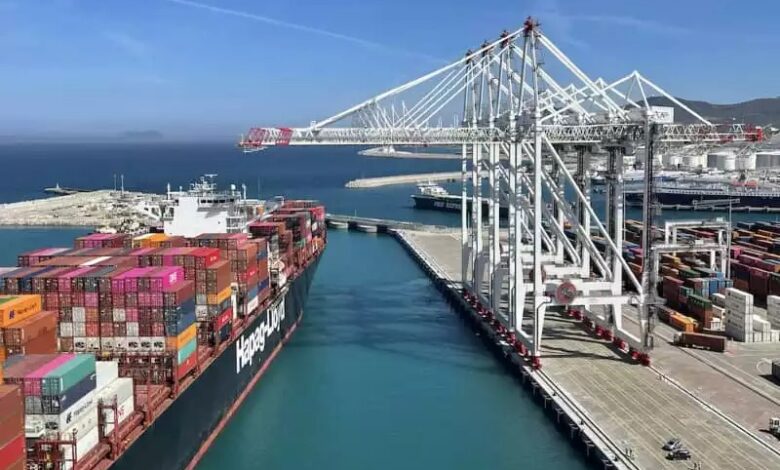
The Tangier Med port complex perfectly illustrates this evolution. More than just a port, it has become a major lever for the Kingdom’s industrialization.
The example of automaker Renault is often cited. The decision to establish its Tangier factory was significantly influenced by the presence of Tangier Med, which provides a swift connection to European markets and meets the logistical demands of the automotive industry.
Today, this platform facilitates the export of hundreds of thousands of vehicles each year and has largely contributed to making the automotive sector the largest export industry in the Kingdom.
Nador West Med and Dakhla Atlantique: Focused on Specific Vocations
The new major port projects are not aiming to replicate the Tangier Med model precisely. Instead, each is developing a specialization tailored to the future needs of the Moroccan economy.
Nador West Med aims to become a reference energy hub in the Mediterranean, with infrastructure dedicated to hydrocarbons, natural gas, and liquefied natural gas (LNG).
Meanwhile, Dakhla Atlantique aligns with a vision focused on the green economy, renewable hydrogen, and strengthening exchanges between Morocco, Sub-Saharan Africa, and the Atlantic region. This project also supports the royal strategy aimed at enhancing the Sahel countries’ access to the Atlantic Ocean.
Connecting Ports to Regions: The Next Challenge
Experts agree that port development will only fully yield results if the infrastructure is better connected to the interior of the country.
Currently, a significant portion of industrial activity remains concentrated along the coast, particularly between Casablanca and Tangier. Strengthening road, rail, and logistical networks is therefore essential to extend the economic benefits to the interior regions.
This multimodal approach will facilitate exchanges, attract new industrial investments, and enhance the integration of regions into national and international value chains.
Investing in Skills and Innovation
The success of this new generation of port platforms will also depend on the availability of skills suited to the sector’s technological changes.
Digitalization, terminal automation, and emerging logistics professions require intensified training efforts. Therefore, developing partnerships between public authorities, universities, and private operators is crucial to support this transformation.
Through this new strategy, Morocco aims to make its ports not just efficient logistical infrastructures but also genuine catalysts for industrial development, innovation, and economic competitiveness.