Morocco Invests 385 Million Dirhams in Five New Train Stations Between Benguerir and Marrakech
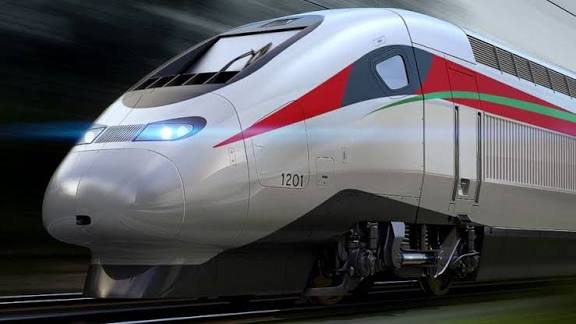
Morocco is advancing its railway infrastructure with the launch of a project aimed at enhancing connectivity between urban, economic, scientific, and sports hubs, as part of the country’s preparations for major international events in the coming years.
In this context, the National Office of Railways (ONCF) has initiated a tender valued at over 385 million dirhams, approximately 38.5 billion centimes, for the construction and equipping of five new railway stations along the Benguerir-Marrakech line.
According to the terms of the tender, the project involves the creation of new infrastructure designed to integrate with the existing railway network and planned expansions, in order to support the urban and economic growth of the region.
The five infrastructures include a high-speed train station in the Green City of Benguerir, a regional transport station (RER) at the same location, and three additional RER stations at Sidi Bou Othmane, Sidi Ghanem, and near the Marrakech Stadium.
Benguerir at the Heart of the Initiative
The Green City of Benguerir holds a central position in this project. As a burgeoning center for science, technology, and economics, it is set to benefit from improved rail connectivity, making travel easier for students, workers, investors, and visitors.
The RER station in the Green City will primarily cater to daily commuters, while the station at Sidi Bou Othmane will enhance service to various areas along the railway linking Benguerir to Marrakech.
The upcoming Sidi Ghanem station will support the industrial and commercial development of the area, while the station planned near the Marrakech Stadium will specifically address the needs linked to this important sports venue and will accommodate large crowds of visitors and supporters during major events.
Fully Equipped Infrastructures
The tender encompasses more than just the construction of buildings; it also includes a wide array of works necessary for the operation of the future stations.
The services outlined in the project cover the construction of concrete structures and infrastuctures, building platforms and ancillary facilities, as well as the layout of passageways and various circulation and connection areas within the stations.
The project also includes finishing works, such as wall and ceiling covering, waterproofing, thermal insulation, painting, and the installation of the technical equipment required for the infrastructure’s operational success.
The future stations will be equipped with medium and low voltage electrical networks, lighting systems, and electrical supply networks, along with water, sanitation, ventilation, and air conditioning systems.
The company awarded the contract will also be responsible for installing security and protection systems, including alarm systems, fire safety measures, and surveillance cameras, to ensure the safety of passengers, infrastructure, and personnel.
Strict Quality and Safety Requirements
The specifications impose several technical obligations on the company in charge of the construction. This includes conducting studies as well as preliminary, execution, and detailed plans before commencing work on the site.
These documents must be submitted for review and approval by the ONCF and the relevant controlling bodies.
The project emphasizes the importance of quality, safety, and environmental protection. The company will need to implement specific plans regarding quality assurance, environmental protection, health and safety measures on-site, and effective workforce mobilization, as well as managing materials and ensuring compliance with the timeline set for project realization and mitigating the impact of the works on rail traffic.
A More Integrated Railway Network
This project comes at a time when Morocco is accelerating its investments in the rail sector, with the aim of gradually transitioning its network from a model mainly focused on connecting major cities to a more integrated system combining high-speed trains, regional transport, and urban mobility.
The five new stations are expected to enhance the attractiveness of the Benguerir-Marrakech axis, while facilitating travel between various residential, economic, scientific, and sports centers.
They will also provide residents and visitors with faster, more efficient public transport solutions, catering to the evolving mobility needs.
This direction is particularly significant as the country approaches major international events, including the 2030 World Cup. Developing a railway network capable of accommodating the anticipated increase in traveler numbers and effectively linking strategic cities and infrastructures is thus one of the principal challenges in modernizing transport in Morocco.