Water and Desalination in Morocco: The Debate Intensifies Over Costs, Governance, and Risk of Inequality
Water Management in Morocco: A Growing Concern Amidst Scarcity
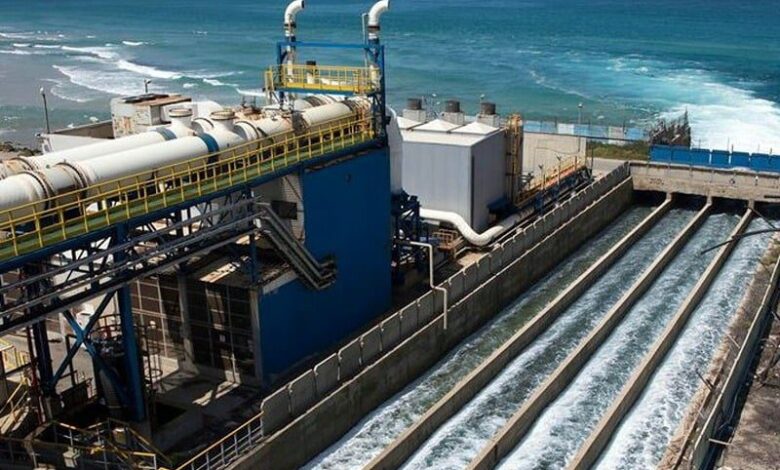
As the issue of water scarcity intensifies and seawater desalination projects accelerate, the question of water costs and management models is taking center stage in Morocco’s public debate.
During the discussion of the 2024-2025 report by the Court of Auditors in the House of Representatives, MP Salwa Demnati, a member of the opposition Ittihadi Socialist group (USFP), expressed her concerns regarding the current direction of national water policy.
Desalination at the Heart of Economic and Social Tensions
The parliamentarian warned of the risk that water may develop into a sector driven primarily by financial profitability, particularly in a context marked by rising public-private partnerships and heightened investments in desalination infrastructure.
According to her, the conclusions drawn by the Court of Auditors regarding the mobilization of unconventional water resources highlight a significant issue: the potential for water scarcity to exacerbate social and territorial inequalities.
A Gap Between Actual Costs and Water Pricing
At the forefront of her remarks is the matter of financing desalination projects and their impact on the price of drinking water.
Referring to the Court of Auditors’ report, the MP pointed out that the production cost of desalinated water significantly exceeds currently applied rates. She suggested that this situation could lead to a substantial operational deficit, estimated in the hundreds of millions of dirhams.
This raises a central question: who will bear this additional cost in the long term? Will it be the state through public finances or the citizens through increased water prices?
Weaknesses in Water Governance
Beyond the financial aspect, the MP also highlighted structural shortcomings in the management of the water sector. The Court of Auditors’ report reveals the multiplicity of stakeholders and the lack of a clearly defined strategy for unconventional water resources.
The elected representative believes these dysfunctions reflect a broader governance issue that affects investment planning and the effective management of available resources.
Recognizing Efforts and Calling for a Comprehensive Strategy
While acknowledging Morocco’s efforts in developing desalination and alternative resources, Salwa Demnati calls for a more coherent and integrated vision for water policy.
She emphasizes the necessity of establishing a clear national strategy that anticipates the effects of successive droughts and ensures fair management of water resources.
Towards a More Holistic Vision of Water Security
Finally, the MP underscores that the recent rainfall, which has improved water reserves, must not distract from the structural challenges at hand.
According to her, desalination projects should be part of a comprehensive water security strategy that balances the needs of agriculture, industry, and populations, while ensuring territorial equity in access to water.