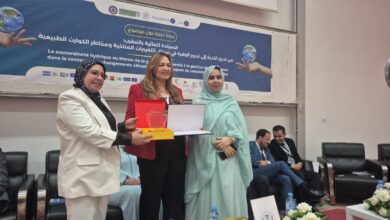
Casablanca-Settat Hosts the First Conference on the Role of Health Cities in Territorial Development

The Role of Healthy Cities in Integrated Territorial Development Programs
The Moroccan Association for Cooperation and Sustainable Development (AMCDD) Casablanca-Settat, in collaboration with various institutional and associative stakeholders, is organizing its inaugural symposium titled “The Role of Healthy Cities in Integrated Territorial Development Programs” on Saturday, January 10, 2026, at the headquarters of the Casablanca-Settat Region.
This event comes at a time of growing awareness regarding public health issues, which have become a major concern for citizens who are increasingly demanding better quality in their living environments and equitable access to healthcare services. This momentum has recently been strengthened by measures aimed at generalizing health coverage, in line with the High Directives of His Majesty King Mohammed VI.
According to data from the High Commission for Planning, over 60% of citizens now live in urban areas, placing cities at the center of public health policies. Urban planning and development must therefore be rethought through new models that promote health-protective urbanism capable of preventing various forms of pollution, encouraging physical activity, mitigating the effects of climate change, and fostering well-being and community cohesion.
The determinants of health in urban settings have a significant territorial dimension. They include air, water, and soil quality, housing conditions, noise exposure, mobility, sanitation, waste management, and the impacts of climate disruption. Additionally, opportunities for citizens to engage in regular physical and intellectual activities, as well as contact with nature, are crucial, not to mention the risks associated with thermal stress from increasingly frequent heatwaves and cold spells in urban areas.
Beyond its health dimension, health is also a vital factor for social cohesion and an economic attraction lever for territories. It thus requires a continuous dialogue among health stakeholders, public decision-makers, and urban planners.
Through this symposium, the organizers aim to intersect various urban determinants with health data in a decidedly interdisciplinary approach. The goal is to gain a better understanding of how development choices impact population health and to contribute to building a knowledge base that can support the development of healthier, more sustainable, and inclusive cities.