Minister Amine Tehraoui Launches Services of 67 Health Centers in 6 Regions
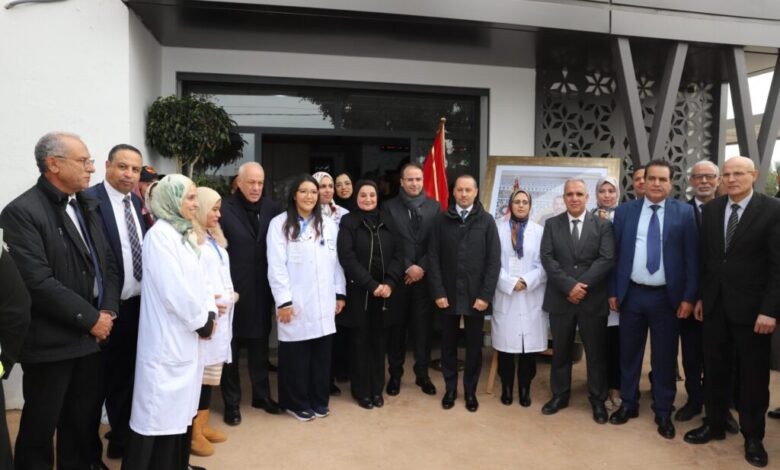
Minister of Health Launches Services for 67 Health Centers in Six Regions
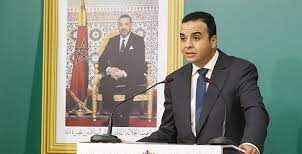
On January 16, 2026, Mr. Amine Tehraoui, the Minister of Health and Social Protection, presided over the inauguration of services for 67 urban and rural health facilities at the first-level urban health center “Moulay Ettehami (Ouled Azzouz)” in the Nouaceur province. This initiative, which follows extensive rehabilitation and equipment improvements, includes primary and secondary health centers, rural dispensaries, and nearby medical units specifically dedicated to emergency care. The ceremony was attended by Mr. Mohamed Mhidia, the Wali of the Casablanca-Settat Region, Mr. Jalal Benhayoun, the Governor of Nouaceur Province, alongside various local officials.
The opening of these facilities aligns with the High Royal Directives of His Majesty King Mohammed VI, may God assist Him, aimed at reforming and upgrading the national healthcare system. It is also part of the ongoing government program dedicated to rehabilitating primary healthcare facilities, targeting the reconstruction, modernization, and equipping of 1,400 health centers throughout provinces and prefectures nationwide.
In the Casablanca-Settat region, the healthcare offer was strengthened with the launch of 18 new establishments. Five first-level urban health centers were inaugurated in Nouaceur Province. In the Mohammedia prefecture, a first-level urban health center, a second-level urban center with a maternity home, and a tuberculosis and respiratory disease diagnostic center have commenced operations. Additionally, a first-level urban health center was opened in Settat Province. The healthcare provision in El Jadida Province has also been enhanced with the establishment of two first-level urban health centers and one second-level urban center. In Sidi Bennour Province, two first-level rural health centers have begun providing services to the local population. Lastly, Berrechid Province inaugurated two first-level urban health centers and two emergency medical units, each consisting of a health center and a maternity home. These infrastructures are expected to serve an estimated population of 1,088,442 residents, supported by 142 healthcare professionals.
In the Tangier-Tetouan-Al Hoceïma region, services were initiated in seven health facilities, including a rural dispensary in Chefchaouen Province and three first-level urban health centers in Larache Province. In Al Hoceïma Province, a second-level rural health center has been commissioned. Furthermore, a second-level urban health center has begun operations in the Tangier prefecture, and the rehabilitation center in Ksar El Kebir has been inaugurated. These structures will cater to approximately 117,565 residents, with 46 healthcare professionals at their service.
The Guelmim-Oued Noun region has witnessed the launch of four health facilities, including two rural dispensaries and two first-level rural health centers in Guelmim Province, benefiting an estimated population of 4,513 residents, supported by eight healthcare professionals.
In the Drâa-Tafilalet region, 11 establishments have commenced operations, which include two second-level rural health centers, one first-level rural health center, one rural dispensary, and one second-level urban health center in Ouarzazate Province. In Tinghir Province, two first-level rural health centers and two second-level rural health centers, along with three rural dispensaries, are now operational, providing services to a combined target population of 77,829 residents, supported by 47 healthcare professionals.
The Marrakech-Safi region has seen the launch of 18 health facilities, including a first-level urban health center, a first-level rural health center, a rural dispensary, and a diagnostic center for tuberculosis and respiratory diseases in Marrakech prefecture, along with an additional health center in Safi Province. Youssoufia Province inaugurated a first-level urban health center while a rural dispensary has been established in El Kelaa des Sraghna Province. In the province of Al Haouz, healthcare services were further enhanced with the establishment of six first-level rural health centers, two second-level rural health centers, two rural dispensaries, and one rural health center, serving an estimated population of 1,571,580 residents, supported by 60 healthcare professionals.
In the Souss-Massa region, nine health facilities have commenced their services, including three first-level urban health centers and a diagnostic center for tuberculosis and respiratory diseases in Agadir Ida-Outanane prefecture. In Chtouka Aït Baha Province, three second-level rural health centers and one first-level urban health center have begun operations. Finally, a first-level urban health center has opened in Tata Province, benefiting an estimated population of 856,745 residents, supported by 99 healthcare professionals.
These health centers, part of the new generation of primary healthcare facilities, aim to strengthen the healthcare offer in the respective regions and bring health services closer to citizens. Their objective includes meeting the growing demand for healthcare, improving access and quality of services, and enhancing the reception, guidance, and management conditions of patients.
It is noteworthy that the Ministry of Health and Social Protection has equipped these facilities with high-quality medical equipment while mobilizing qualified human resources to ensure the delivery of medical and nursing services. Beneficiaries will have access to a diverse range of healthcare services, including general medical consultations, nursing care, chronic disease management—especially diabetes, hypertension, and respiratory illnesses—maternal and child health follow-ups, school health services, health education and awareness activities, as well as epidemiological surveillance and mobile health services.