Riyad Mezzour and the Lesson from the Diaspora: When Political Discourse Goes Awry
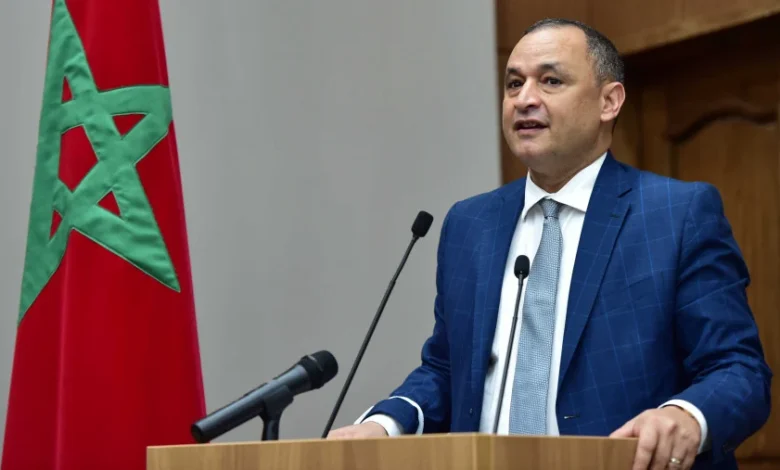
In political communication, words are never neutral. They build bridges… or dig trenches. This is a lesson that the Minister of Industry and Commerce, Riyad Mezzour, is learning the hard way. An intervention that was likely intended to encourage industrial investment swiftly turned into a national controversy over the tone adopted towards Moroccans living abroad.
This situation is indicative of a broader phenomenon: in the age of social media, governmental communication is no longer measured solely by the content of a speech, but also by its tone, symbolic weight, and how it is perceived by the relevant audiences. In this particular case, many interpreted the minister’s words as criticism directed at the diaspora for its alleged lack of economic engagement with Morocco.
The issue is that the relationship between the Moroccan state and its diaspora is anything but ordinary. Moroccans living abroad are not just an expatriate community; they represent one of the economic and social backbones of the country. Their financial transfers amount to billions of dirhams annually and are among the primary sources of foreign currency for the kingdom. However, their contribution goes beyond financial flows; it encompasses an emotional, cultural, and symbolic dynamic that far exceeds mere economic logic.
It is precisely this connection that some observers believe was undermined by the minister’s remarks. When a public official appears to demand accountability from a diaspora that has supported the national economy for decades and rallied during crises, the message can quickly be perceived as a form of institutional ingratitude.
Recent memories are still fresh. During the COVID-19 pandemic, as well as after the Al Haouz earthquake in 2023, Moroccans living abroad demonstrated remarkable solidarity, mobilizing community networks and financial resources to support their homeland. In this context, any discourse suggesting that their engagement is lacking strikes a sensitive chord.
However, the matter extends beyond just a rhetorical misstep. It reveals a structural tension in how public authorities view the diaspora: balancing symbolic recognition with economic expectations. For several years, Morocco has sought to transform the savings and skills of expatriates into productive investments capable of strengthening the country’s industrial sovereignty. This ambition is legitimate, but the call for contribution must not devolve into a demand.
The Moroccan diaspora has profoundly evolved. It is no longer merely comprised of migrant workers sending home remittances. A new generation of entrepreneurs, engineers, and investors is emerging globally. This generation thinks in terms of ecosystems, business climates, and legal security. They are not swayed by appeals to economic patriotism unless accompanied by concrete reforms.
In this context, the controversy surrounding Riyad Mezzour serves as a revealing moment. It underscores that in relations with the diaspora, pedagogy and recognition are as crucial as economic incentives. It also highlights a political reality: in a hyperconnected world, the diaspora now constitutes a public opinion in its own right, capable of influencing the image and credibility of political leaders.
The question now is whether this episode will remain a mere communication incident or will trigger a broader debate about the role of Moroccans abroad in the country’s economic strategy. One thing is certain: the industrial sovereignty that Morocco aspires to build cannot solidify without a strong trust pact with its diaspora.
And this pact always begins with a simple principle: consideration.