Water in Morocco: Strengthened Territorial Governance in Response to Climate Challenges
World Water Day: Highlighting Sustainable Water Resource Management in Morocco
On the occasion of World Water Day, celebrated annually on March 22, the issue of sustainable water resource management emerges with particular urgency, especially given the context of declining precipitation and the intensifying effects of climate change.
In Morocco, water is a strategic issue at the heart of public policies, directly linked to economic development, territorial balance, and social cohesion. In light of the increasing pressure on water resources, the Kingdom has initiated a series of reforms aimed at enhancing the governance of the sector and improving the efficiency of water-related services.
In this framework, the establishment of regional multi-service companies represents a significant structural evolution in the management of public services, particularly concerning the distribution of drinking water, electricity, and wastewater management. These entities aim to ensure better coordination of interventions, optimize resources, and provide a uniform quality of service across territories.
The Souss-Massa region exemplifies this dynamic through the actions of its regional multi-service company, which is fully engaged in implementing an integrated water management policy. Its initiatives focus on securing drinking water supplies, reinforcing and expanding infrastructure, and improving network performance—especially by reducing losses and adopting innovative technologies.
Moreover, this approach is complemented by strong commitments to awareness-raising and communication, aimed at promoting responsible water use. Through local campaigns and on-the-ground actions, citizens are encouraged to adopt water-saving behaviors, thereby contributing to the preservation of water resources.
Today, the issues surrounding water extend beyond environmental concerns to encompass a broader reflection on development models and the sustainability of resources. In this context, the collaborative mobilization of institutions, local stakeholders, and citizens remains an essential lever for addressing current and future water challenges in Morocco.
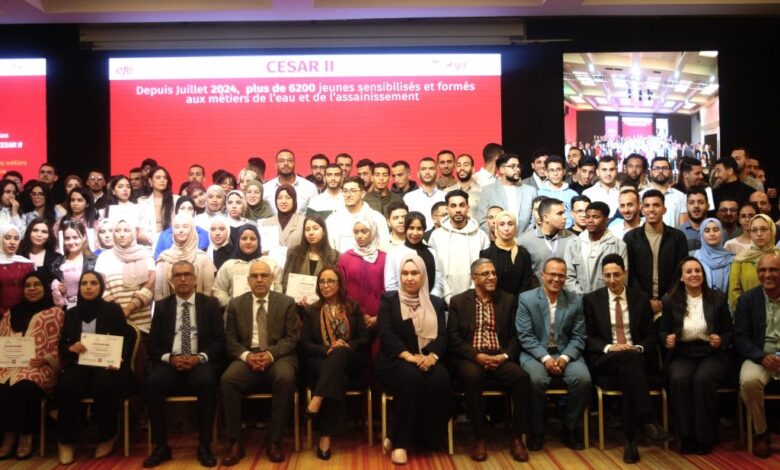
In this spirit, EFE-Maroc organized a ceremony to celebrate the achievements of the CESAR II project, implemented in partnership with GIZ. This event provided an opportunity to revisit the main actions carried out under the program and highlight its impact on the employability of youth in the water and sanitation sector, particularly emphasizing the effective and exemplary contribution of SRM-SM to the project’s success.
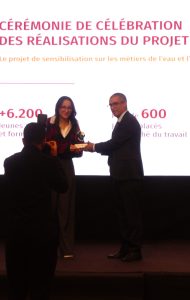
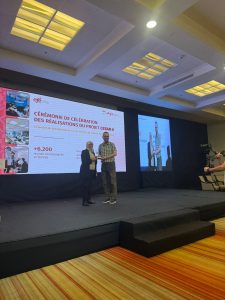
The ceremony also recognized the gender contributions in line with World Water Day, honoring two prominent women within SRM-SM: Ms. Barakat, Head of the Studies Department, and Ms. Ighious, Head of the QSE Service. This event marked the issuance of certificates following training sessions organized for SRM-SM staff and its subcontractors, celebrating their commitment to enhancing skills and capacities in the water sector.
In conclusion, Morocco’s proactive approach to water management illustrates the importance of integrated strategies and collective action in navigating the challenges posed by climate change and resource scarcity.